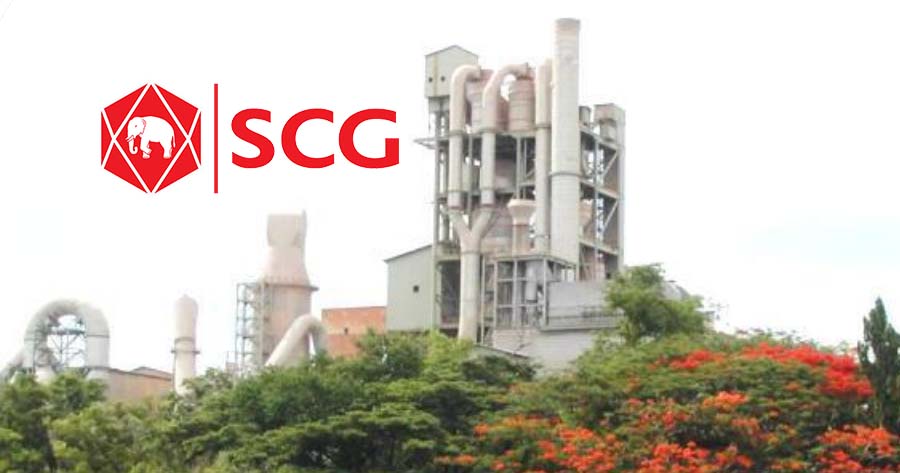
The ongoing closure of the Strait of Hormuz continues to reverberate across the petrochemical sector, with The Siam Cement Public Company Limited’s (SET: SCC) petrochemical arm, SCG Chemicals (SCGC), among at least seven producers announcing force majeure in recent weeks, according to Finansia Syrus Securities (FSS).
SCGC currently sources approximately 70% of its raw materials from abroad, with the majority (70%) transiting the Strait of Hormuz. The disruption to maritime logistics has led to a projected shortfall of about 30% in raw material deliveries to petrochemical plants in March 2026. In response, SCGC has declared force majeure and temporarily shuttered its Rayong Olefins (ROC) plant.
This is to allocate existing feedstock supplies to optimize production at the remaining two cracker facilities—Map Ta Phut Olefins (MOC) in Thailand and the Long Son Petrochemicals (LSP) plant in Vietnam—at a sustainable operating rate of 80%, which the company deems optimal for profitability and fixed-cost management.
With these adjustments, SCC estimates it can maintain production for about one month, or through mid-April 2026, before requiring further action depending on how the situation develops.
The ROC facility, operational since 1999, is SCGC’s smallest and oldest cracker, with an annual capacity of 900,000 tons of ethylene and 450,000 tons of propylene. ROC’s quarterly fixed costs stand at around THB 500-600 million.
Finansia estimates that a one-month closure of ROC would dent SCGC’s annual profit by approximately THB 170-200 million (THB 0.14-0.17 per share), equivalent to 2% of the broker’s full-year profit forecast. In a scenario where all three crackers are shut down, monthly profit could decrease by about THB 1.4 billion, roughly 16% of the 2026 profit estimate.
Other SCC businesses, including cement and its packaging arm SCGP, face only limited direct repercussions from the oil supply disruption, as oil is not a primary input. However, they do encounter indirect cost pressures from elevated energy prices. Notably, SCC has boosted usage of alternative energy to 50%, while SCGP’s coal consumption represents 15% of production cost, with a portion of procurement secured via fixed contracts.
At least seven petrochemical plants in countries such as Indonesia, South Korea, Singapore, China, and Saudi Arabia have now announced force majeure proceedings, highlighting the regional scale of the supply chain crisis.
As cited by Finansia, SCC management affirms that they are closely monitoring the situation and stand ready to resume normal operations as soon as feedstock supplies stabilize. The brokerage maintains its ‘Hold’ recommendation on SCC with a target price of THB 220 per share.