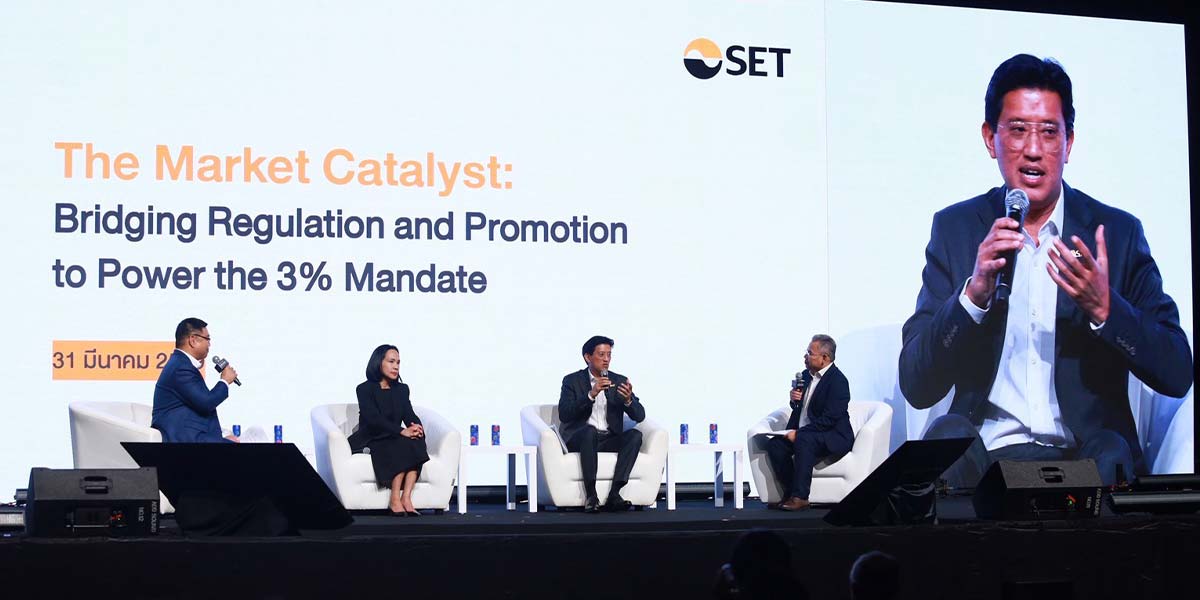
Thailand’s capital market is advancing a coordinated transformation to become a core driver of economic growth, according to the briefing at the “Battle Strategy 2026: Winning the New World Order” forum.
Once viewed primarily as a contingency funding source after the 1997 financial crisis, the capital market now plays a central role, supporting approximately 90% of Thailand’s GDP at present, with historical peaks at 124%.
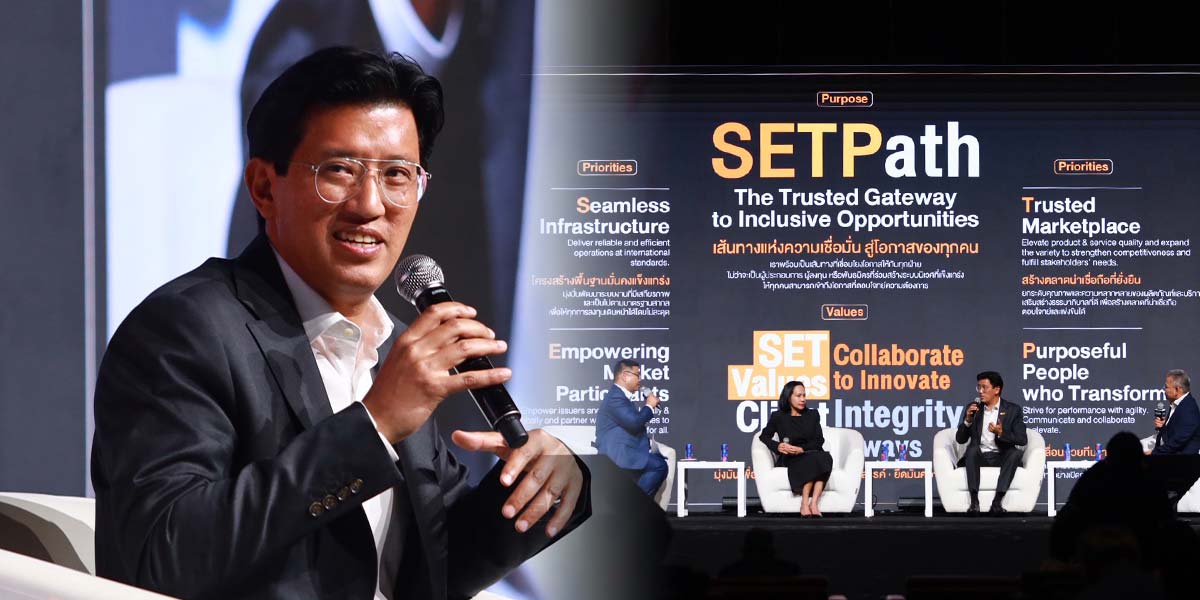
Prof. Dr. Pornanong Budsaratragoon, Secretary-General of the Securities and Exchange Commission (SEC), and Mr. Asadej Kongsiri, President of the Stock Exchange of Thailand (SET), detailed a strategy focused on achieving a 3% GDP growth target. The plan integrates regulatory rigor—intended to ensure trust and fairness—with active promotion of new investment opportunities and financial innovation.
A major emphasis is shifting from seeing regulation solely as a restrictive force to a broader vision of enabling and energizing growth.
Key initiatives include the creation of the Thailand Individual Savings Account (TISA), offering a permanent, tax-advantaged investment vehicle for individuals. The expansion of the Vayupak Fund is intended to reinforce domestic capital stability, while the “BOI to IPO” campaign aims to attract foreign companies listed in Thailand.
Additional programs enable retail investors to access government bonds and encourage listed firms to focus on long-term shareholder returns.
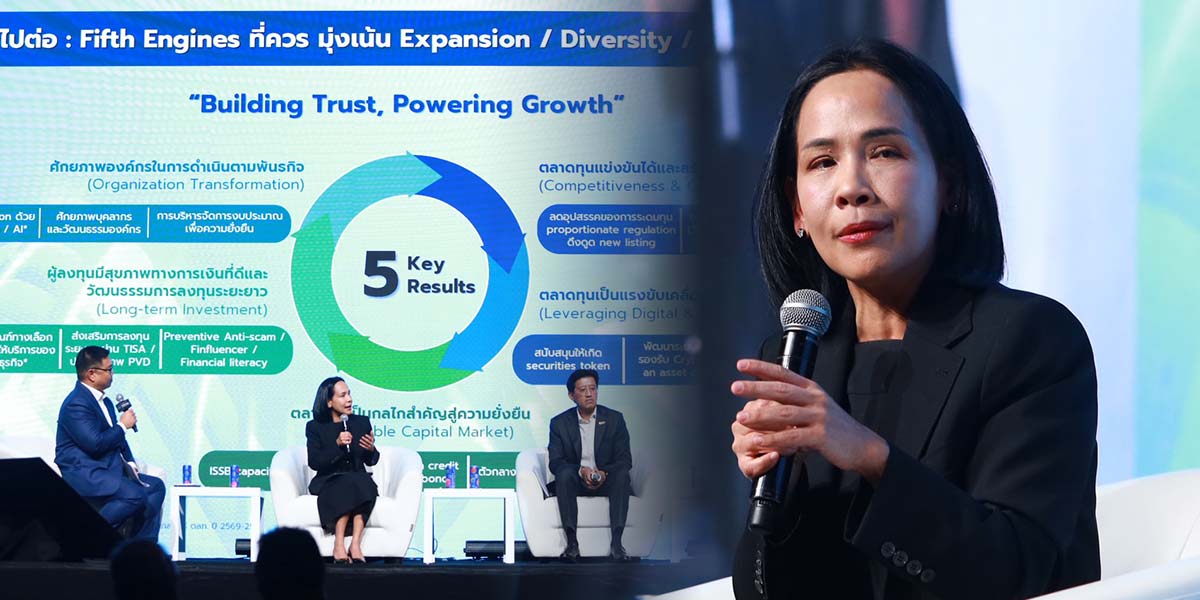
The authorities are also adjusting the infrastructure that supports investors and public companies. The SEC’s approach centers on “building trust, powering growth,” combining firm enforcement against market misconduct with openness to digital assets and ESG-driven finance. The SET prioritizes “seamless infrastructure,” striving for a reliable market experience in which operational risks are minimized for all participants.
Balancing market promotion and investor protection is a recurring theme. The SEC views enforcement against infractions as an unavoidable but necessary element of maintaining a trusted market environment and plans to introduce an “FA Factsheet” to increase transparency around financial advisors.
At the same time, structural issues such as high-frequency trading and short selling are under assessment, with academic teams engaged to independently evaluate their impact on market fairness and liquidity.
The capital market’s future trajectory places significant importance on innovation. Measures are in place to help investors access global assets locally, such as through Depositary Receipts (DRs) for foreign companies. Efforts to integrate digital assets, facilitate carbon credit trading, and pioneer transition finance underline the commitment to keeping pace with evolving market trends.
Looking ahead to the remainder of 2026, the SEC and SET plan to intensify outreach efforts and roll out cornerstone initiatives like the Individual Saving Account. The overarching goal is to reinforce the view of Thailand’s capital market as a stable, inclusive source of long-term investment and a foundational pillar supporting the nation’s economic growth.