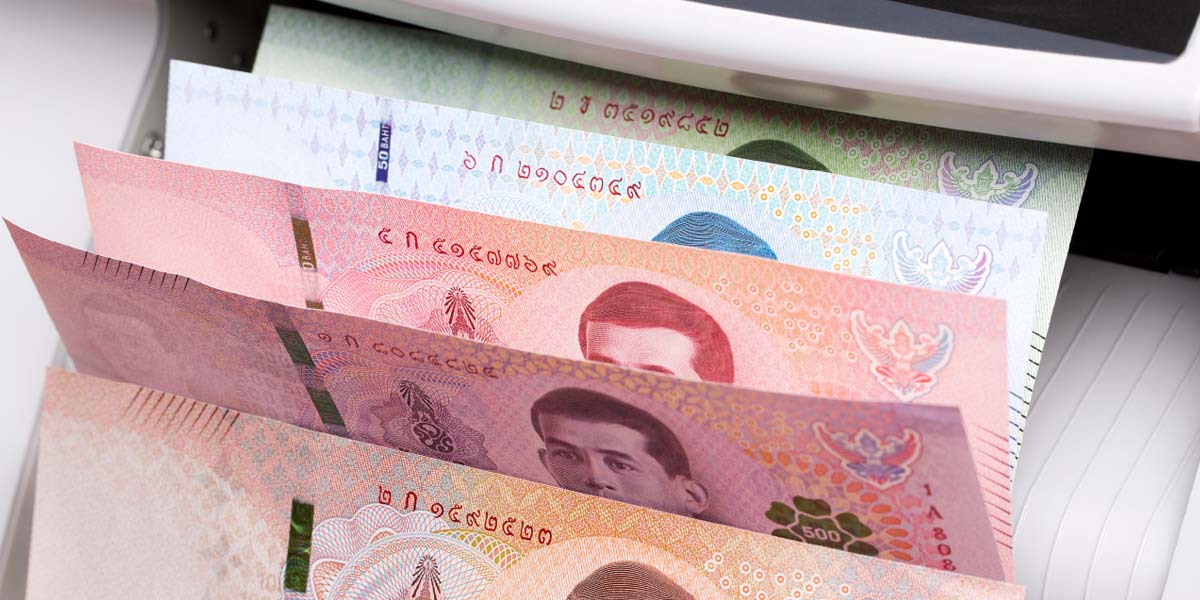
The Thai baht is facing significant downward pressure, reaching a two-week low of 32.32 per US dollar on April 27.
Since the outbreak of the Iran War in late February, the currency has depreciated by more than 4%, ranking as one of the poorest performers in Asia, trailing only the Philippine peso. Although a brief ceasefire in early April offered a temporary reprieve, the stalling of diplomatic talks has caused the currency to resume its decline.
A major factor behind this underperformance is Thailand’s status as having the largest net oil-and-gas trade deficit in Asia. This makes the nation exceptionally vulnerable to rising oil prices driven by Middle East volatility. Furthermore, the ongoing US blockade of Iranian ports continues to disrupt global energy flows, leading analysts from MUFG Banks to predict the baht could slump to 33.90 per dollar this quarter—its weakest point since April 2025.
Internal economic factors are also contributing to the currency’s struggle. The second quarter is traditionally marked by seasonal dividend-related outflows and weak economic fundamentals, both of which are weighing on the baht’s valuation. Investors are currently focused on upcoming policy decisions from the Bank of Thailand’s Monetary Policy Committee and the US Federal Reserve.
In an effort to stabilize the situation, the Bank of Thailand is expected to hold its policy rate at 1.00%. The central bank plans to use targeted debt-resolution and government stimulus to encourage foreign investment in long-term bonds, which may help alleviate depreciation pressure. Nevertheless, the baht’s future stability remains closely tied to the resolution of geopolitical conflicts and global energy trends.