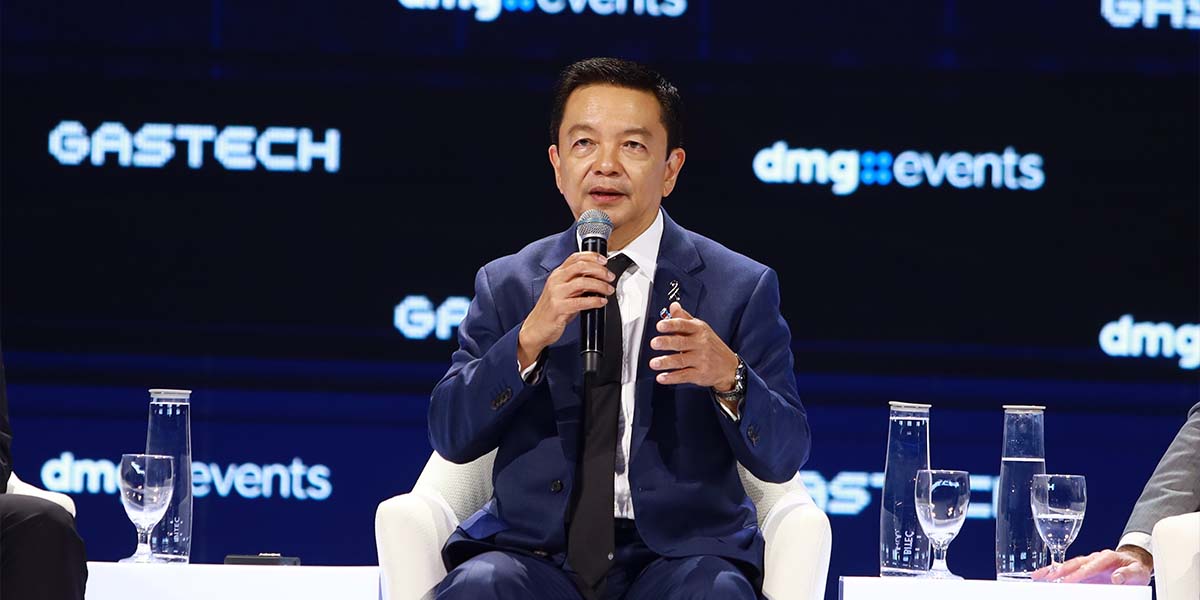
In an era marked by geopolitical uncertainty and accelerating electrification, no single energy provider can navigate the energy transition in isolation. Establishing strong strategic partnerships and investing in shared regional infrastructure are the essential foundation for ensuring long-term energy security, stability, and affordability across Southeast Asia.
That was the primary message delivered by Dr. Kongkrapan Intarajang, CEO and President of PTT Public Company Limited (SET: PTT), during a panel session at Gastech 2026 titled “LNG in the age of electrification: Contracting, competition and demand realities”.
A Strategic Pivot from Cost Optimization to Supply Security
Reflecting on recent market disruptions across Asia, Dr. Kongkrapan observed that while energy companies previously sought to optimize operations primarily through opportunistic global imports, market realities have forced a fundamental shift in priorities toward supply security and stability.
Thailand currently relies on domestic natural gas for 50% of its supply while importing the remaining 50%. To insulate the domestic market against external shocks, PTT is actively diversifying its risks by securing varied fuel sources while expanding exploration activities in the Gulf of Thailand.
Dr. Kongkrapan noted that maintaining a stable supply will become even more critical as industrial electrification and power-dense data centers expand rapidly across the region.
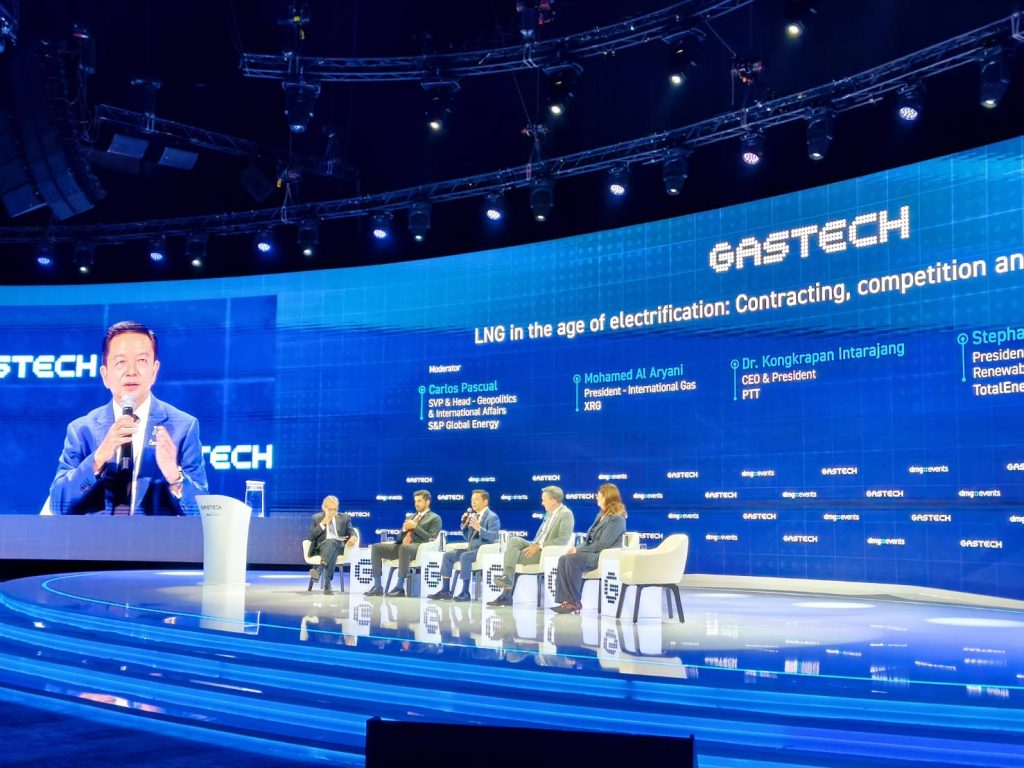
Planning for Flexibility in an Uncertain World
Addressing the dual challenge of meeting rising energy demand and advancing decarbonization, Dr. Kongkrapan emphasized that natural gas and LNG will remain indispensable, provided organizations build in operational flexibility and adjustability.
He highlighted that decarbonization must be pursued through pragmatism and clear economic justification—combining efficiency upgrades in existing operations with carbon capture technologies. Utilizing gas in various forms alongside cost-effective decarbonization methods offers the most reliable pathway to maintain regional stability amidst ongoing global market volatility.
The Power of Regional Partnerships and Infrastructure
Highlighting Southeast Asia’s existing energy grid, Dr. Kongkrapan identified partnership and robust infrastructure as the twin keys to long-term success. ASEAN already benefits from an interconnected network featuring thousands of kilometres of cross-border gas pipelines between nations like Thailand and Malaysia, alongside nearly 20 LNG receiving terminals.
Because individual companies cannot finance massive infrastructure developments alone, building trust among regional partners is crucial. Even when direct partnerships in LNG or gas contracts do not exist, establishing trust across broader business domains creates the groundwork for vital collaboration.
Furthermore, because major infrastructure projects such as LNG import terminals require several years to construct, accurate demand forecasting and advance planning are essential. Waiting until a crisis hits to build infrastructure leaves regions vulnerable to severe supply shortages.
Balancing National Security, Resilience, and Costs
Addressing how the costs of building resilient energy systems are managed, Dr. Kongkrapan outlined PTT’s dual responsibility as both a state enterprise safeguarding national energy security and a publicly listed company accountable to investors.
During supply crises, PTT’s priority shifts decisively toward national security. Through proactive pre-investments—including upgrading refinery flexibility to allow switching between Middle Eastern and Eastern crude grades within a week, expanding international trading offices, and cultivating long-term partner relationships—Thailand suffered zero energy supply shortages or force majeure events during recent crises.
While building resilience carries real costs, Dr. Kongkrapan affirmed that PTT strives to absorb upfront investments and manage financial trade-offs internally, ensuring energy security is delivered to end-consumers at the minimum possible cost.