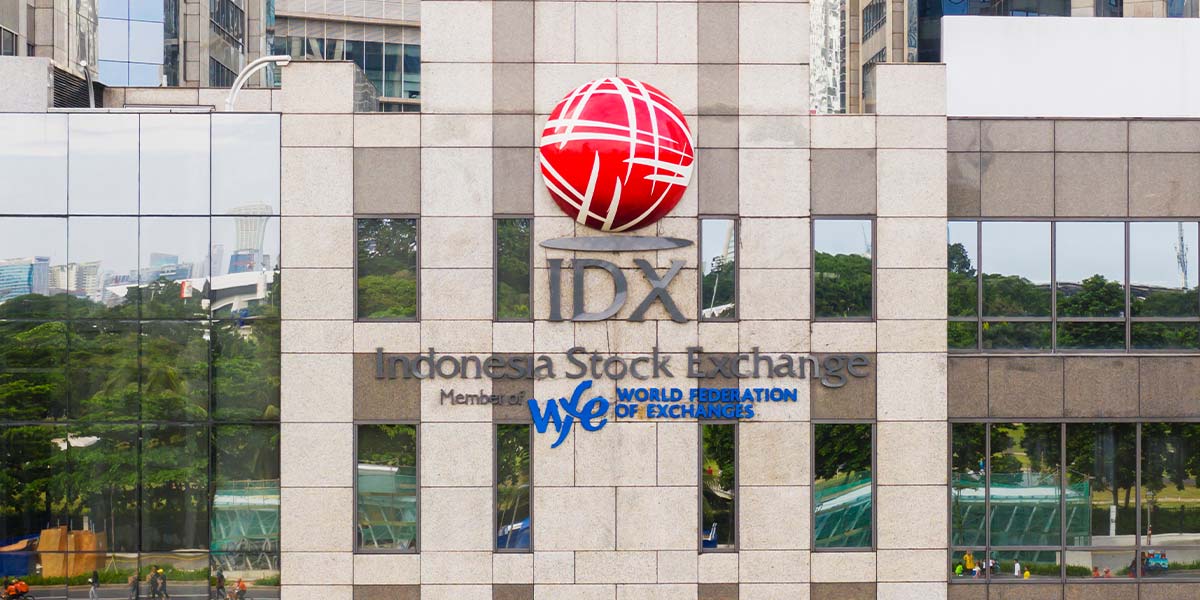
Indonesian equities suffered a steep sell-off after global index provider MSCI announced plans to initiate a public consultation regarding a potential downgrade of the country from Emerging Market status to a Standalone Market.
The Jakarta Composite Index settled 11.5% lower on Friday while also triggering an automatic 30-minute circuit breaker to halt transactions during the session. The Indonesian rupiah weakened 0.5% to 18,035 per U.S. dollar amid growing concerns over potential foreign capital flight.
MSCI cited persistent transparency concerns regarding shareholding structures and trading practices, noting that regulatory reform efforts have been insufficient to resolve issues deemed too severe for a simple reclassification to Frontier Market status.
Under MSCI’s proposal, a reclassification to Standalone Market would result in the complete removal of Indonesian securities from all MSCI global indices, forcing benchmark-tracking index funds to liquidate their holdings. The Standalone Market category is currently reserved for countries such as Argentina, Lebanon, and Palestine, and no Asian nation currently holds this designation.
The threat of demotion poses long-term risks to Indonesia’s liquidity, investor base, and equity valuations, potentially depressing price-to-earnings and price-to-book ratios. Koraphat Vorachet, Assistant Executive Vice President and Head of Research at Krungsri Securities (KSS), estimated that with approximately $650 billion in assets under management tracking the MSCI Emerging Markets Index, Indonesia’s 0.5% weighting represents roughly $3.25 billion in passive capital that could be forced to exit if excluded.
Furthermore, active funds hold an overweight allocation of roughly 1.0% in Indonesian stocks—double the index weighting—creating a substantial risk of pre-emptive divestment ahead of any formal decision expected by June 2027.
While short-term sentiment across Southeast Asian markets could remain cautious, the potential redistribution of foreign capital presents a strategic opportunity for neighboring markets, particularly Thailand. If Indonesia’s index weighting is entirely removed and redistributed, Thailand’s passive weight would rise slightly from 1.000% to 1.005%, attracting an estimated $32.7 million in passive inflows.
However, the analyst emphasizes that a far greater prospect stems from active global funds overseeing an estimated $7.5 billion, which could reallocate capital toward liquid, transparent Thai equities with sound fundamentals.
Krungsri Securities highlighted Kasikornbank (KBANK), Krungthai Bank (KTB), Advanced Info Service (ADVANC), PTT Global Chemical (PTTGC), PTT Public Company Limited (PTT), Gulf Development (GULF), and Delta Electronics (Thailand) (DELTA) as primary candidates for foreign active portfolio shifts.
Investment strategists at Krungsri Securities advise investors to selectively accumulate quality Thai shares during market pullbacks while exercising caution regarding broader regional volatility. MSCI’s review remains in the public consultation phase without a finalized ruling, meaning market participants should closely monitor capital flow indicators and regulatory developments rather than assuming automatic inflows.