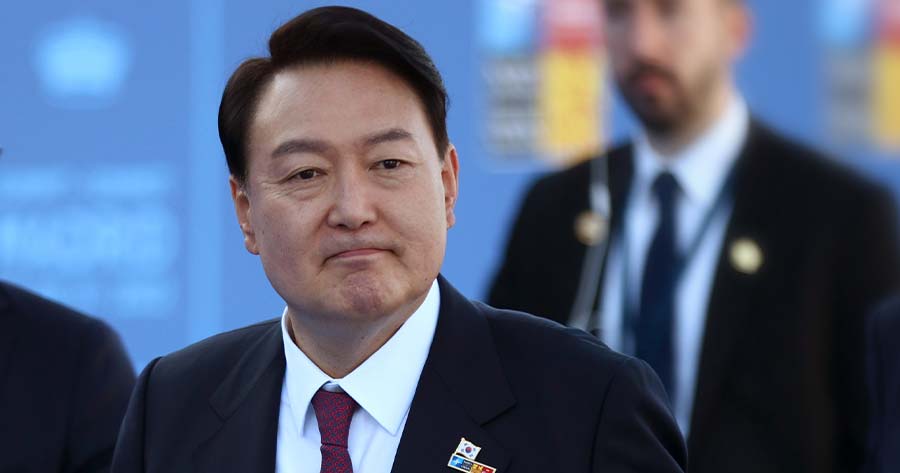
A South Korean court has sentenced ex-President Yoon Suk Yeol to life imprisonment after convicting him of instigating an insurrection and overstepping presidential authority. The ruling follows Yoon’s December 2024 attempt to impose martial law, marking the country’s most significant political verdict in recent years.
Under South Korean law, insurrection carries a maximum punishment of death or life in prison. While prosecutors had pressed for capital punishment, Seoul Central District Court’s Criminal Division 25 instead imposed a life sentence. The nation has not carried out an execution since 1997, despite the most recent death sentence being handed down in 2016
The court also reviewed Yoon’s directive for military and police forces to intervene during the crisis. He had ordered troops to forcibly remove lawmakers from parliament and authorized security forces to control access to several key sites, including the opposition party building.
Throughout the proceedings, Yoon maintained his innocence, asserting that the declaration of martial law was within his constitutional rights. He contended that the intervention aimed to address legislative gridlock triggered by the opposition.
On the night that Yoon announced martial law, legislators moved quickly to assemble and vote on a motion to revoke the decree, an action permitted by the constitution. This led to scenes of confrontation, with large crowds outside parliament and security personnel limiting access while televised footage showed lawmakers and civilians clashing with soldiers.
Within six hours, the National Assembly voted to end martial law, prompting Yoon to rescind the order and conclude the crisis. Despite its short duration, the episode caused intense political and legal repercussions nationwide. As Asia’s fourth-largest economy and a longtime U.S. ally, South Korea’s reputation as a resilient democracy was tested.