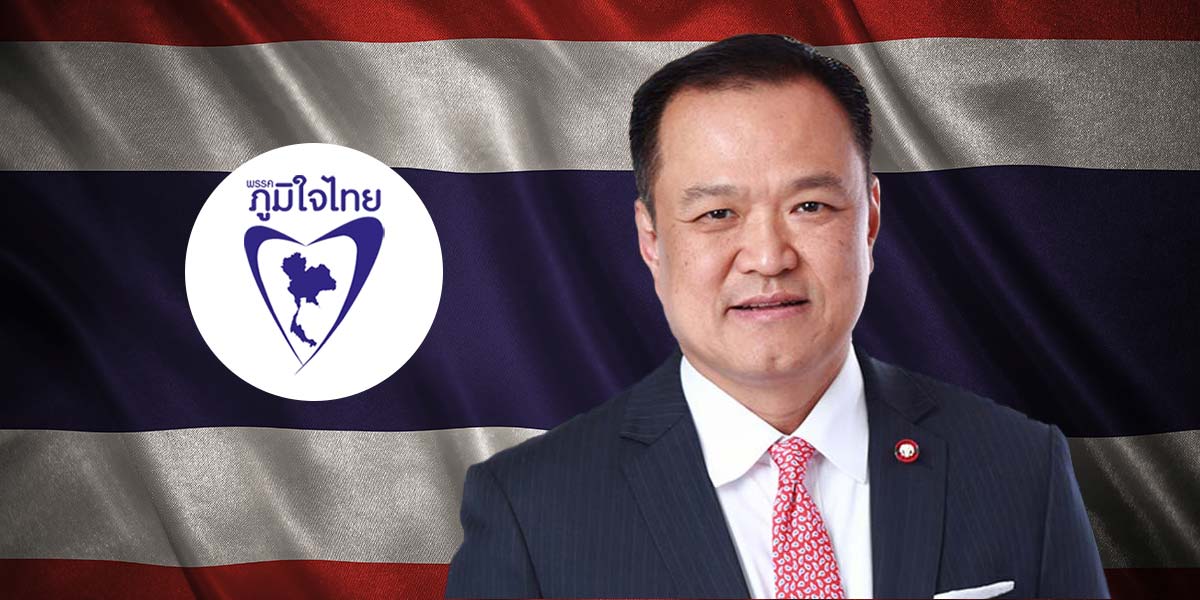
Anutin Charnvirakul has been reaffirmed as Thailand’s Prime Minister after receiving 293 out of 499 parliamentary votes on March 19, 2026. The outcome establishes a clear mandate for Anutin, signaling continuity and potential policy stability at a time of regional and domestic uncertainty.
The Bhumjaithai Party, led by Anutin, has emerged as the dominant force in the Thai legislature, gaining ground after February’s general election with 194 seats. The party’s transition from a junior coalition member to the leading party has shifted Thailand’s political balance and is expected to influence the direction of policy during this term.
Anutin’s coalition, which now encompasses the Pheu Thai Party as a secondary partner and several conservative factions, gives the government a commanding majority in the 500-seat House of Representatives. Notably, the Senate, previously involved in prime ministerial decisions, no longer participates in the selection process.
Anutin has pledged to implement several key initiatives with clear economic and geopolitical implications. The government intends to restart the “Half-Half Plus” co-payment program targeting lower living costs and higher consumer spending. On national security, the administration plans to maintain its robust response to border issues with Cambodia, a stance that featured prominently during the campaign period. For investors, the proposed introduction of the “BOI Fast Pass” aims to accelerate foreign direct investment into sectors such as digital technology and green energy.
Despite the parliamentary majority, challenges remain. The opposition People’s Party, holding significant sway in Bangkok, is expected to scrutinize government policy and legislative proposals. Meanwhile, the Constitutional Court is presently examining a petition concerning the February election, creating a potential source of uncertainty as Anutin prepares to announce his cabinet.
Formal royal endorsement of the new government is anticipated soon. The coming days are likely to offer greater clarity on cabinet appointments and the government’s policy agenda during Anutin’s second tenure.