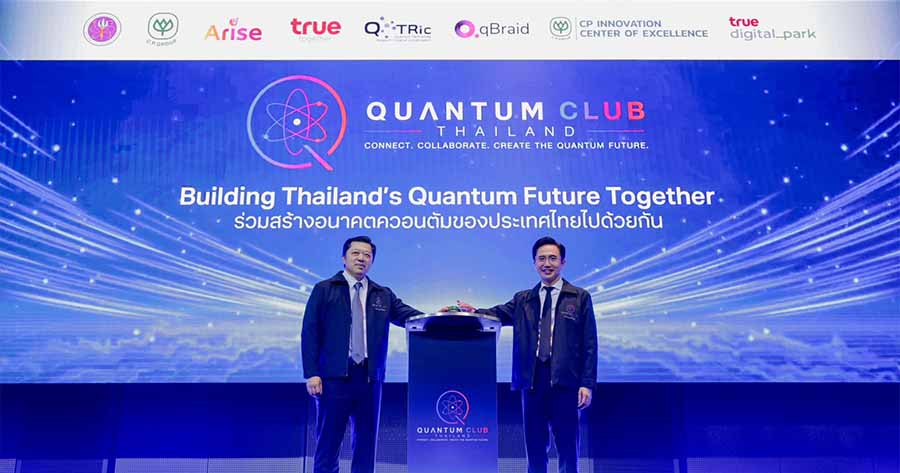
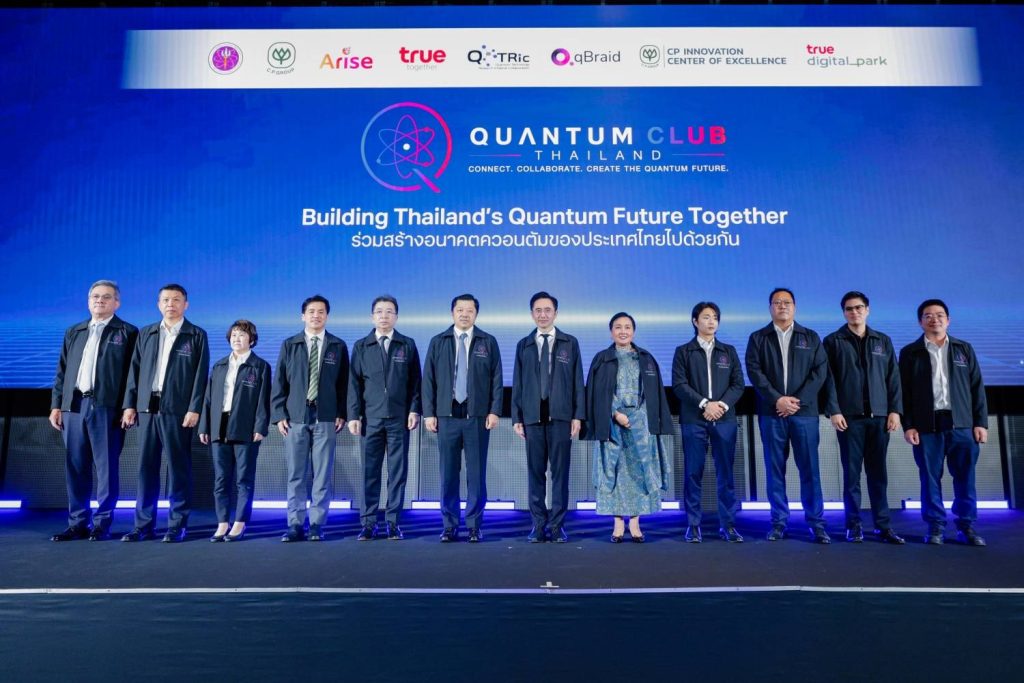
Thailand has officially entered the global quantum race with the launch of Quantum Club Thailand, a national collaboration platform hosted at True Digital Park, dubbed as Center of Excellence for Thai innovation and technology. This initiative marks a historic partnership between the Ministry of Higher Education, Science, Research and Innovation (MHESI), the CP Group, True Corporation, Arise Ventures Group, the Quantum Technology Research Initiative Consortium (QTRic), and US-based qBraid.
A Vision of Sovereignty
Prof. Dr. Yodchanan Wongsawat, Deputy Prime Minister and Minister of Higher Education, Science, Research and Innovation (MHESI), articulated a vision where quantum technology is not an isolated field but a critical component of a “triad” alongside nuclear energy (SMRs) and space exploration. He emphasized that for Thailand to achieve true national technological sovereignty, it must move beyond purchasing data from foreign entities.
By combining space-based remote sensing with terrestrial biosensors and genomic data, Thailand aims to fuel a next-generation AI infrastructure. However, because standard high-performance computing (HPC) cannot process this volume of multi-domain data, the integration of Quantum HPC is imperative for the country to “stand firmly on its own feet”.
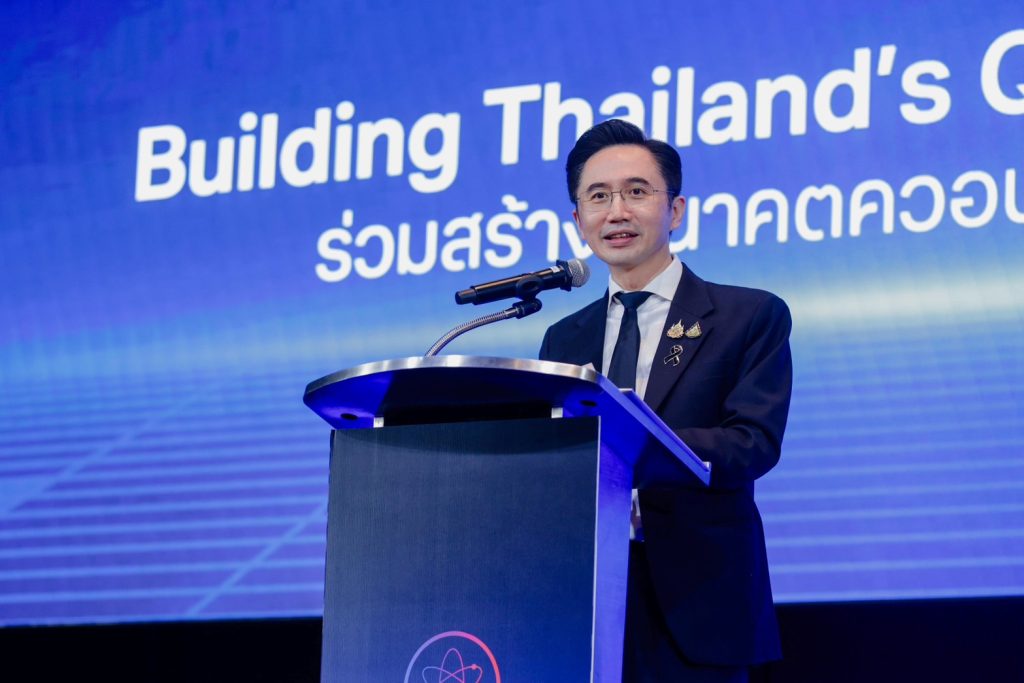
Minister Yodchanan identified Photonics as Thailand’s “hidden gem” and a primary academic strength that gives the nation an “underdog” advantage in developing optical quantum computing architecture. By utilizing light instead of electrons, Thailand can more easily link its research to quantum communication and computing.
To accelerate growth, the Minister introduced the concept of “Science Diplomacy”. This strategy allows Thailand to navigate complex geopolitical landscapes by focusing strictly on academic and research collaborations—such as sending researchers to Europe, the US, or China—without the immediate pressure of formal MOUs or political alignment.
Minister Yodchanan concluded by praising the “courage” of the private sector in investing in such a high-risk, frontier technology, noting that without private sector leadership, a complete national ecosystem would be impossible to sustain.
“The most critical element in this transition is not computers, data centers, or machinery, but ‘people.’ While technology can be acquired, building the talent capable of creating next-generation technologies requires continuous, local investment and development,” said Yodchanan.
Real-World Applications and Accessibility
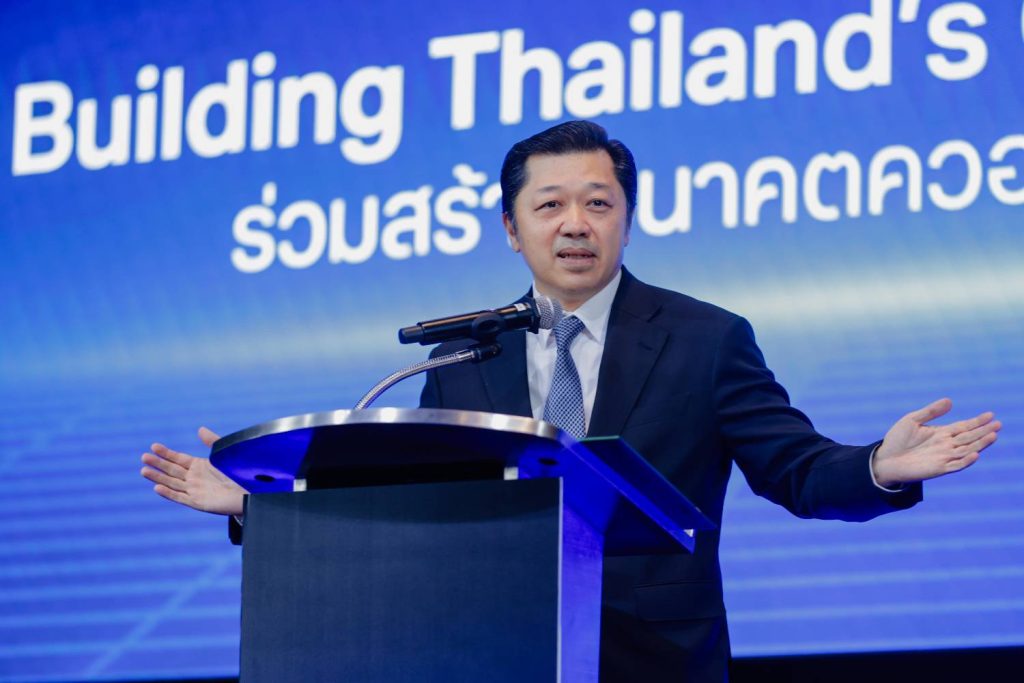
As a Senior Vice Chairman of Charoen Pokphand Group, Chairman of True Corporation, and Chairman and CEO of Arise Ventures Group, Mr. Suphachai Chearavanont outlined how quantum computing could solve entrenched local and global issues, ranging from Bangkok’s traffic congestion and environmental crises to curbing corruption through enhanced probability modeling. He further defined four “Accessibility” missions for the ecosystem:
- AI for All: Ensuring the most affordable access to basic AI.
- Health Access: Utilizing data and AI for preventative healthcare.
- Financial Inclusion (Fintech): Serving the 70% of the population that is “underbanked” and capturing the “indirect economy”.
- Quality Education: Grooming the younger generation through AI-governed education systems.
The 100-Billion-Baht Innovation Blueprint
A major highlight from the launch was Suphachai’s ambitious proposal for a national innovation infrastructure. He suggested a 100-billion-baht (approx. $3 billion) funding model to establish five innovation labs across five key areas: Space, Digital/Computing, Robotic/Automation, Biotech, and Material Nano-Tech, in collaboration with five Thai universities.
The proposed allocation of these funds includes:
- World-class equipment and labs, which Suphachai noted is essential to prevent “brain drain” of Thai scientists to foreign countries.
- Hiring world-class personnel on 3-to-5-year contracts to transfer knowledge.
- Direct research grants.
Drawing from his experience with infrastructure funds—such as fiber optics and telecommunications towers that typically generate a 5-6% annual yield—Suphachai estimated that a 100-billion-baht fund would require approximately 5 billion baht in annual support to be viable to build a “Boston or Silicon Valley” style cluster in Bangkok. To achieve this, he proposed a public-private matching fund idea based on a 10-year commitment for the public and private sector to jointly contribute this funding.
Ecosystem and Hardware Roadmaps
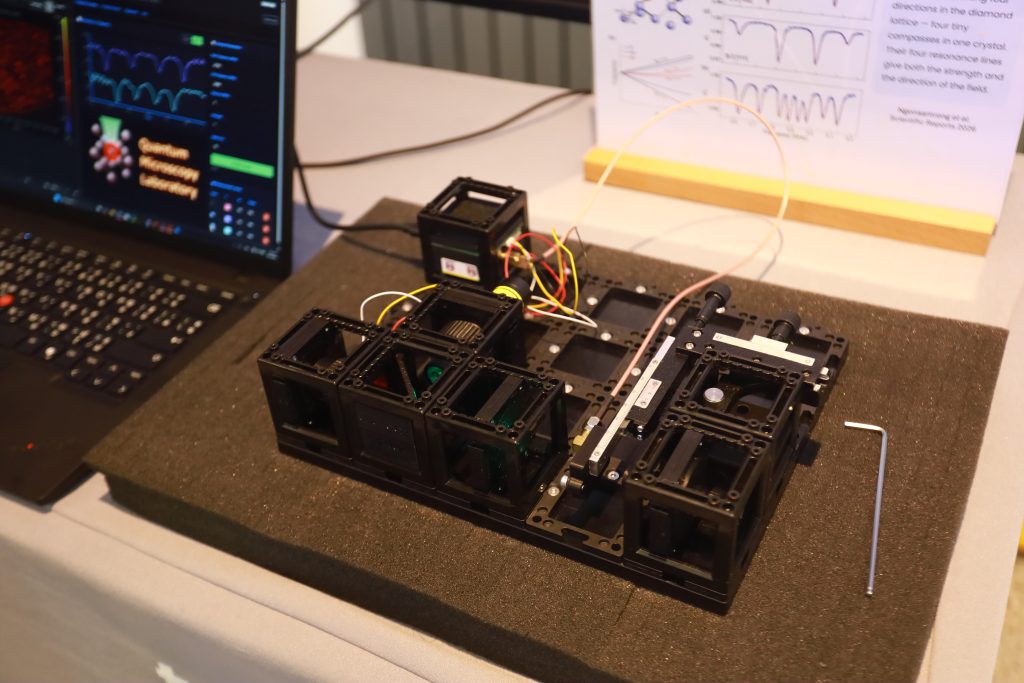
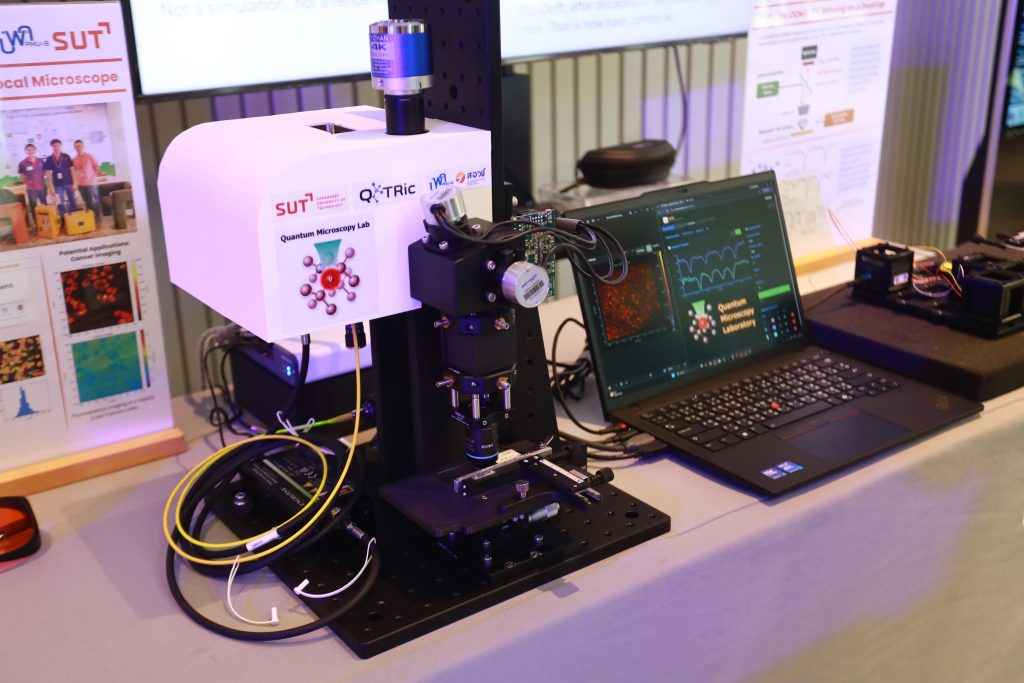
While quantum technology is not yet fully commercialized, the club provides immediate access to hardware. The CP Group/True Digital Park lab plans to import hardware from Europe to foster a diverse research environment.
Quantum Club Thailand will operate through three flagship programs: Quantum Academy Thailand, Quantum Industry Lab, and the Quantum Innovation Challenge. It serves as both a virtual and physical hub at True Digital Park, where the 5,800 existing partners—including startups, VCs, and big tech—can “hang out” and cross-pollinate ideas between quantum, AI, and the space economy.
“Thailand must shift from being a technology follower to a co-innovator of technology. We should not merely be users of AI or quantum technology, but must build our own ecosystem of researchers, developers, and entrepreneurs,” said Suphachai.