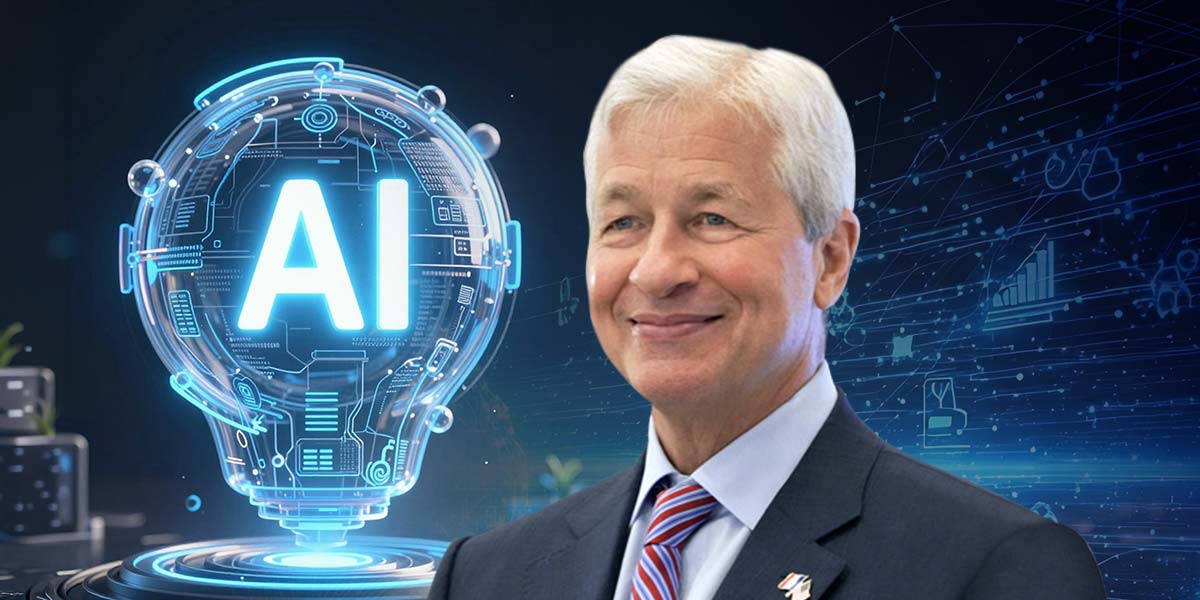
According to JPMorgan Chase CEO Jamie Dimon, artificial intelligence investment among the world’s largest technology firms is growing at a historic pace, with forecasts suggesting annual spending across the hyperscaler ecosystem could approach $1 trillion by next year. This surge is reshaping market expectations and intensifying industry discussions around inflation, business models, and safety.
This rapid capital deployment has caused hyperscaler investment to more than double, rising from an estimated $300 billion last year to approximately $700 billion in 2026. Dimon notes this expansion is supporting global economic growth—potentially boosting GDP by about one percent each year—but it also risks contributing to inflation as firms expand operations and purchase equipment at scale.
However, he cautions that it remains too early to identify which companies will emerge as long-term winners. The CEO likens the current climate to the early internet era, when many market entrants failed, while less prominent businesses positioned themselves for future leadership.
In parallel, the intense pace of AI buildout is starting to strain major U.S. technology companies. A Reuters analysis of LSEG consensus estimates suggests that by 2027, leading hyperscalers are on pace to spend more on capital expenditures than they generate in free cash flow. While their combined operating cash flow is projected to increase substantially, capital commitments are rising even faster, driven primarily by data centers and supporting infrastructure.
Meanwhile, leading figures within the sector have raised concerns about the current pace of AI advancement. Anthropic CEO Dario Amodei published a detailed essay calling for a slowdown in AI development, warning that rapid progress could soon enable AI systems to exert broad influence across the internet.
Amodei, along with executives from xAI, OpenAI, and DeepMind, has indicated support for increased external oversight and shared system access to help guide development responsibly.
However, some do not agree on the need for collective restraint. Nvidia CEO Jensen Huang has maintained that ongoing innovation is crucial for AI’s long-term progress and does not support a pause in development. Meta CEO Mark Zuckerberg has argued that AI labs should set their own pace and remain accountable for any risks or harm resulting from their models, rather than seeking industry-wide coordination.