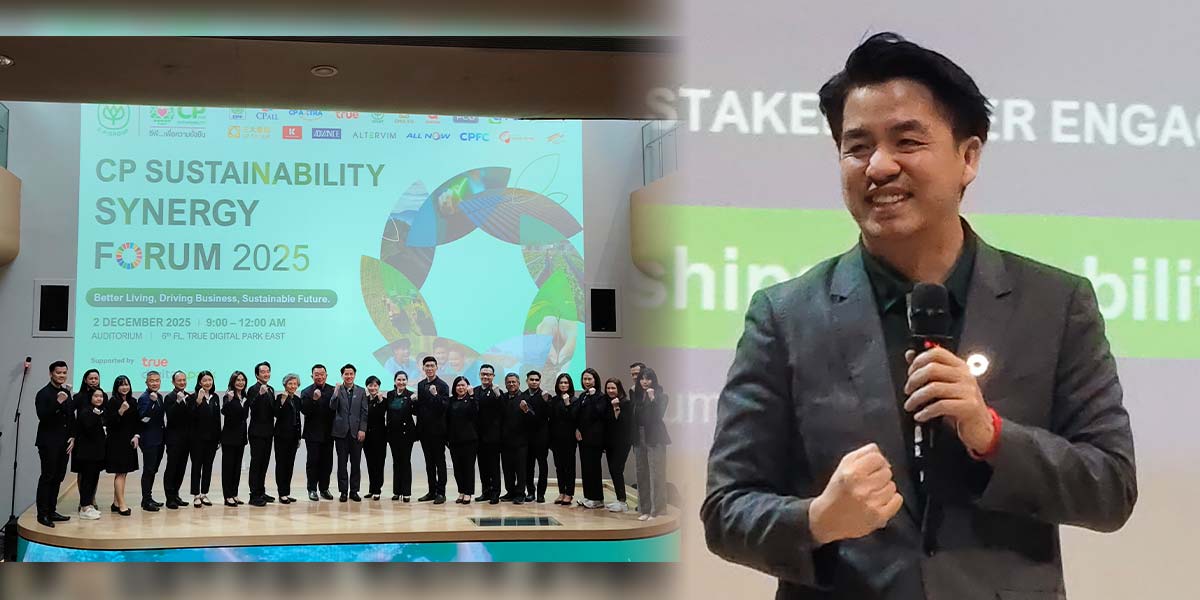
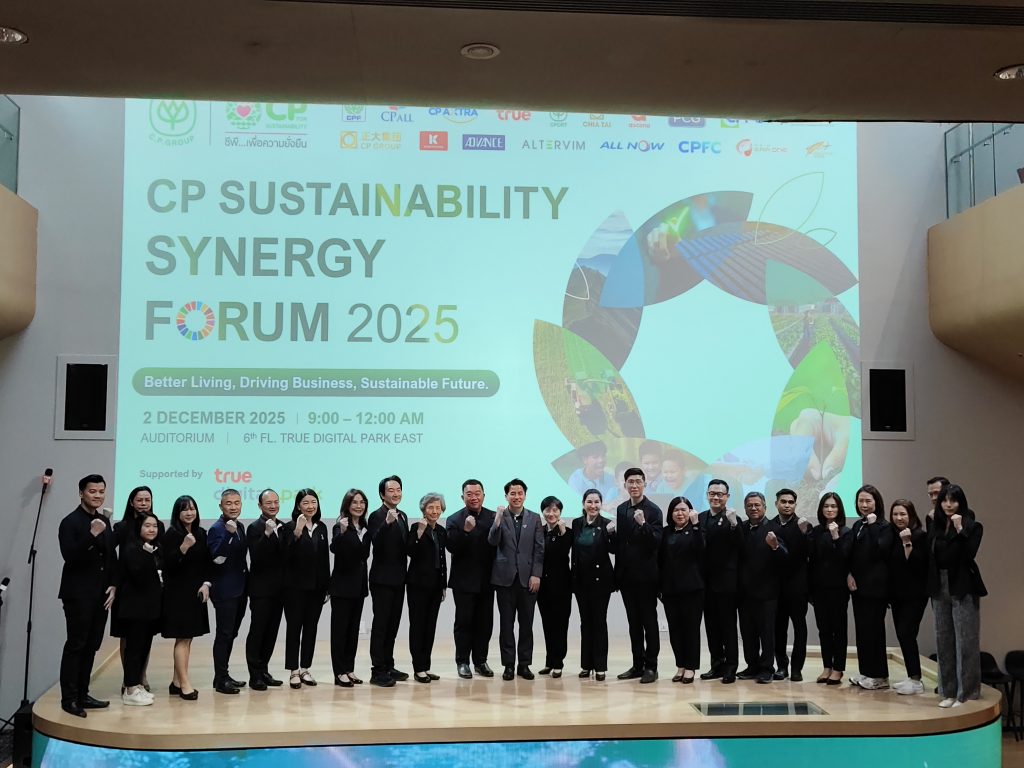
At the “CP Sustainability Synergy Forum 2025,” Dr. Teerapon Tanomsakyut, Chief of Strategic Intelligence and Sustainability of CP Group, announced a major strategic pivot for the conglomerate’s sustainability efforts under the theme “CP Sustainability Center of Excellence” as a platform to define the future direction of sustainability across the entire value chain.
The event, hosted by the Sustainable Development, Governance, and Corporate Communication Office (SGC) identifies significant challenges, including the drastic effects of climate change, carbon emission, and food waste. Meanwhile, the forum also touched on corporate governance and public support as well.
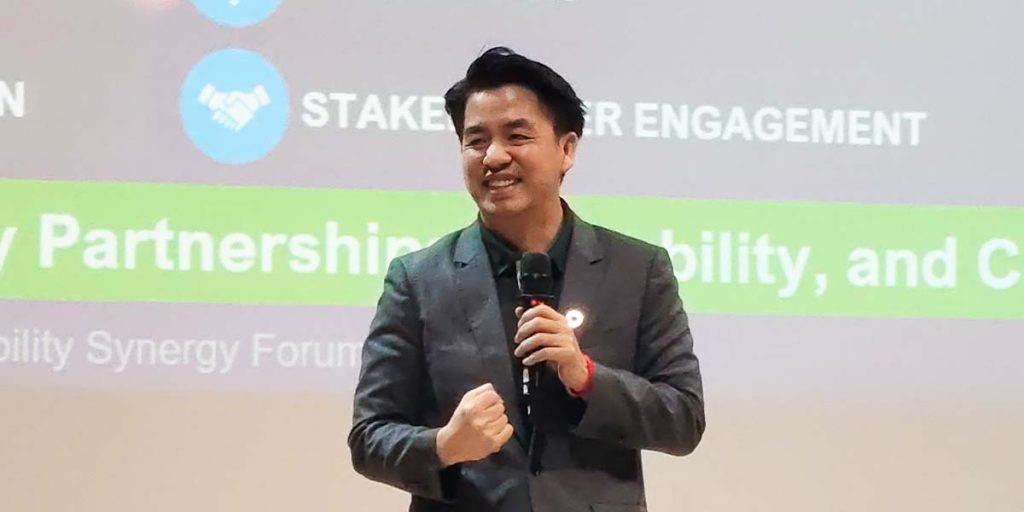
Operating across 22 countries, CP Group faces complex challenges that necessitated this strategic shift. Dr. Teerapon pointed to several critical global risks:
1) Climate Change: The initial goal of limiting global warming to 1.5°C above the pre-industrial era has been missed. The average temperature is projected to be 1.47°C above that level. This climatic volatility drastically impacts agricultural productivity and the extinction of various pollinating insects.
Furthermore, the rise of AI technology—such as the use of ChatGPT—requires massive processing power and consumes enormous amounts of electricity, making energy consumption a critical materiality issue.
2) Circularity & Waste: The world generates 2 billion tons of waste annually. A major problem is food waste: approximately one-third of all food produced globally becomes waste, even as half the world’s population suffers from hunger. This waste includes unsold items and food left to expire in homes.
Dr. Teerapon highlighted that the Group has introduced several measures to lower food waste, while being able to transform these waste into a cultivation of Black Soldier Fly (BSF) protein insects, which serve as animal feed.
3) Supply Chain Sustainability: The CP value chain is extensive, covering seeds, animal feed, and farming. For CP’s agricultural business, Scope 3 emissions (those from partners and suppliers) account for a massive 90% of total emissions. Consequently, CP’s internal efforts address only 10% of the emissions challenge, requiring profound collaboration with external partners.
4) Inclusive Business: This area addresses social equity, noting that 8.5% of the global population is in poverty, 250 million children lack education, and one-third of the population lacks internet accessibility. Public expectations require large corporations to use their structure for public benefit beyond sales. CP implements this through platforms like True’s “Plook Panya,” which provides education to approximately 15 million people annually, and by exploring concepts like transforming 7-Eleven stores into “convenience knowledge stores”.
5) Cyber Security: Cyber security is a top materiality issue, particularly as the Group enters the AI era and faces sophisticated hackers. Global damages from cybercrime are estimated at 20 trillion USD, and 75% of organizations worldwide have experienced a cyber attack. Protecting company and customer data is paramount.
6) Governance & Transparency: This covers perennial issues like corruption, internal fraud, and mismanagement. The central challenge is establishing an organizational culture rooted in honesty and integrity. Currently, only 38% of organizations disclose all Governance and Governance data.
Aligning with CEO Vision
To overcome these challenges, Dr. Teerapon stressed that all efforts must align with CEO Suphachai Chearavanont‘s vision for CP Group to become a “leading tech and innovative conglomerate.” This involves transforming traditional sectors—such as agriculture, retail, and media—into technology-driven models, including Precision Agriculture, Smart Retail, and Digital Media.
The Group’s primary environmental targets are the Twin Goals: Carbon Neutrality by 2030 and Net Zero Carbon by 2050. Despite implementing solar panels on nearly every available rooftop, only 17% of the Group’s energy is currently generated from clean sources. Dr. Teerapon also added that human rights and sustainability practices should expand throughout the supply chain of all 452,000 employees.
He highlighted that the Group operates within a “golden age of sustainability,” where global Green Funds, suppliers, and customers are all committed to ESG practices, creating immense opportunities for value creation.
The Center of Excellence
The new CP Sustainability Center of Excellence (COE) is designed to leverage the vast expertise within the Group to create commercial opportunities.
Dr. Teerapon emphasized that “the sustainability teams must transition from reporting and compliance (cost center) to innovation & business value (profit center)” as the Group is transforming into a technology and innovation company.
Dr. Teerapon concluded by stressing the importance of management buy-in, clearly defining goals, and assembling multi-disciplinary teams—including leveraging external expertise from universities—to drive these CoE projects forward. He stated that sustainability work must transform from merely complying with standards to actively leading change and undertaking impactful projects.