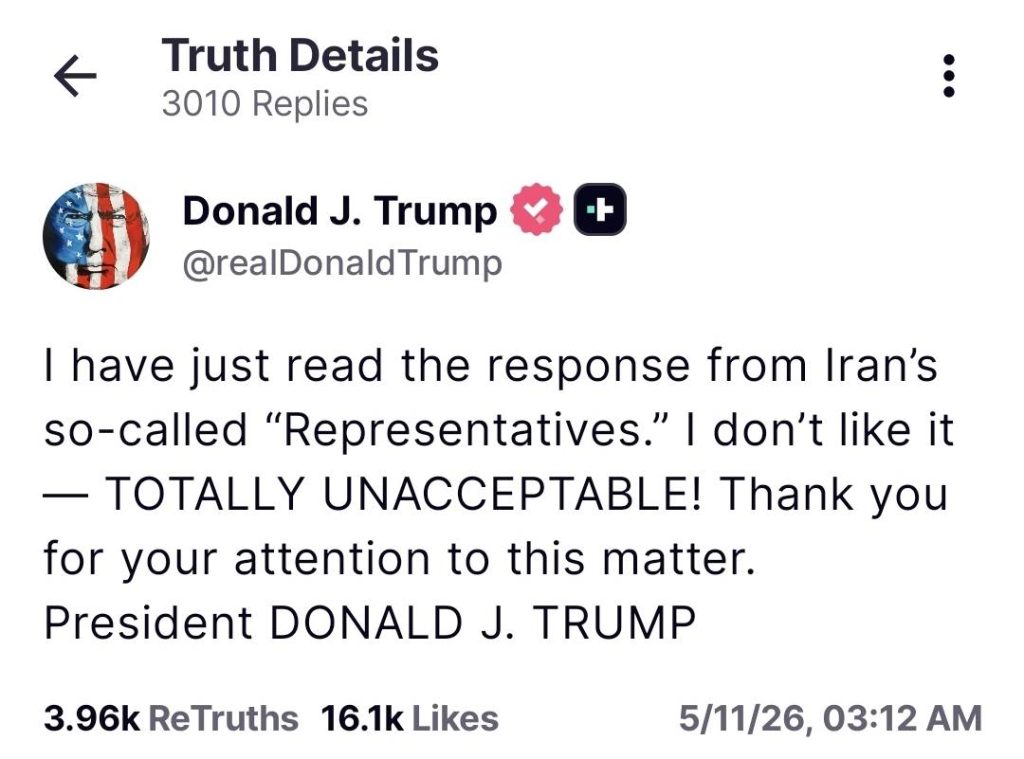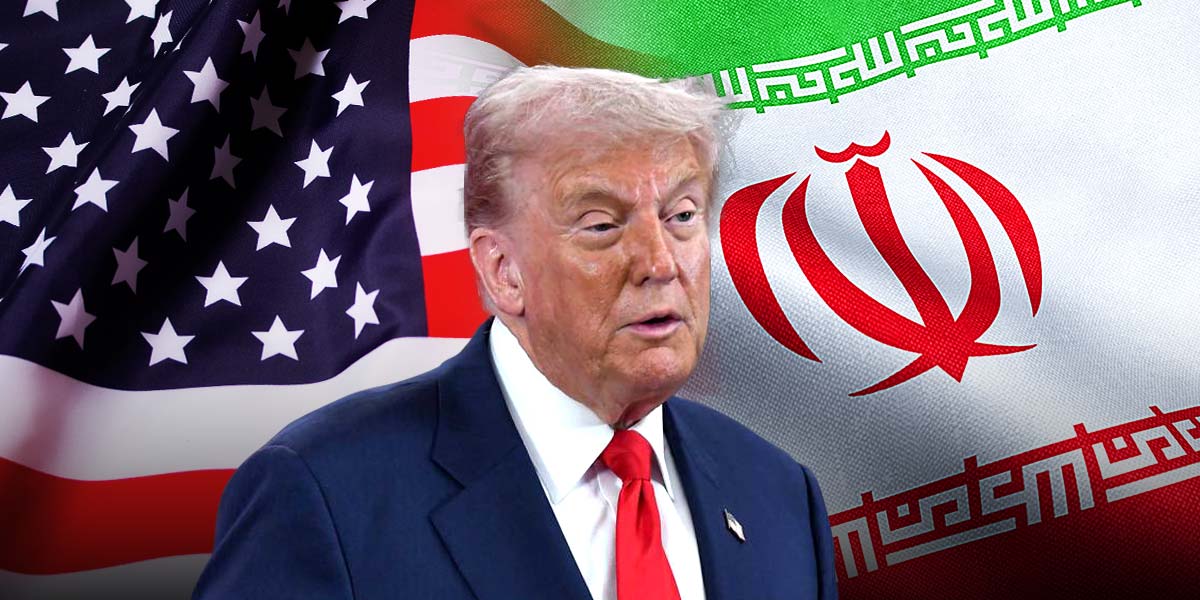
President Donald Trump has officially rejected Iran’s 10-point peace proposal, calling the terms “totally unacceptable” and dashing hopes for an immediate end to the 10-week-old conflict.
The Standoff and Iran’s Demands The conflict has already caused widespread damage in Iran and Lebanon while paralyzing traffic in the Strait of Hormuz. In a counter-offer transmitted through Pakistan, Tehran proposed a “permanent cessation of hostilities” and a new regional order. Key demands in the 10-point document included the immediate lifting of the U.S. naval blockade, an end to sanctions, and compensation for war damages.
Furthermore, the proposal characterized the U.S. military presence as the “main source” of instability, asserting that the Strait of Hormuz should be free of American forces. Tehran emphasized its sovereign control over the Strait as the key to a “shared destiny” for Gulf countries, claiming foreign powers are no longer welcome.
A significant hurdle remains the scope of negotiations. While Washington initially proposed ending the fighting before addressing Iran’s nuclear program, Tehran’s response sought to focus strictly on ending the war and ensuring shipping safety. Sources indicate Iran requested deferring sensitive topics, such as its nuclear and missile programs, to a later date—a stance that failed to meet U.S. requirements for a comprehensive security deal.
Following the rejection, global oil prices surged. Brent crude rose to between $104–$105 per barrel, while West Texas Intermediate (WTI) moved near $98–$99. Despite the tension, Iran permitted a Qatari LNG vessel to transit the Strait for the first time since late February, though it warned that nations adhering to U.S. sanctions would continue to face maritime restrictions.
With Trump flatly stating, “I don’t like it,” the path to regional stability remains blocked by deeply conflicting visions for the Middle East.