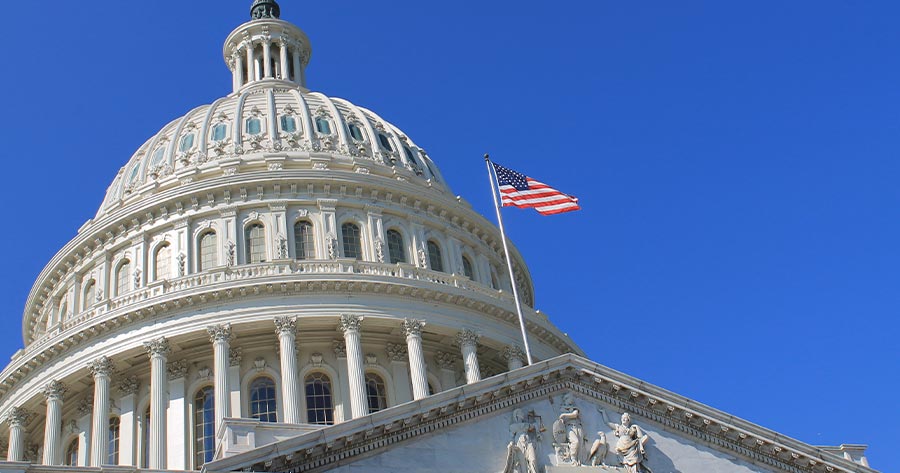
The U.S. House of Representatives, led by the Republican majority, approved a resolution on Wednesday seeking to halt President Donald Trump from continuing military operations against Iran. The decision followed growing concerns among some Republicans over the administration’s management of the conflict, now entering its fourth month.
The war powers resolution passed narrowly with 215 in favor and 208 against. Four Republicans joined Democrats to support the measure. The vote had been postponed nearly two weeks earlier due to insufficient support among House Republicans. Despite its approval in the House, the measure will take effect once it receives approval from the Senate.
Under the 1973 War Powers Resolution, the president must obtain congressional authorization if military action persists beyond 90 days. Tensions over this issue increased as the current conflict surpassed that milestone. The administration has contended that a temporary ceasefire declared on April 8—a ceasefire sometimes violated by the U.S., Israel, and Iran—means the 90-day rule does not apply.
This marks the fourth occasion the House has endorsed a resolution attempting to curtail President Trump’s powers regarding the Iran conflict. In the Senate, a related measure advanced procedurally last month after repeated prior failures, but further Senate votes have yet to be set.
Legally, the House’s action constitutes the first step in a lengthy legislative process. Based on war powers legislation, the Senate now faces a roughly two-and-a-half-week window to address the resolution.
The measure does not require the president’s signature to proceed, but any binding withdrawal directive from Congress would almost certainly require either presidential approval or a two-thirds override veto in both chambers, according to Supreme Court precedent set in 1983.
Efforts for a negotiated settlement to the conflict with Iran continue, with administration officials expressing optimism about a prospective agreement, though no definitive progress has yet been made.