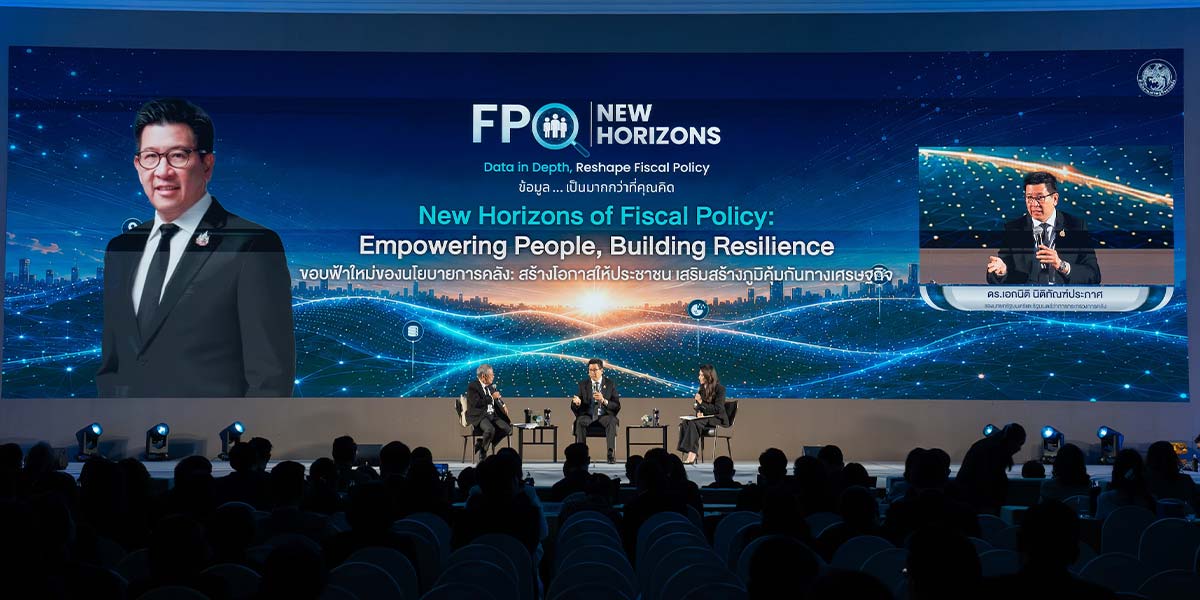
The Fiscal Policy Office (FPO), Ministry of Finance, has laid out its roadmap for modern fiscal governance at the FPO Symposium 2026, held under the theme “FPO’s New Horizons: Data in Depth, Reshape Fiscal Policy.” The initiative aims to lay a foundation for elevating Thailand’s economic potential, accelerating growth, and enhancing national competitiveness.
By transitioning into a Data-Driven Fiscal Policy Agency, the FPO leverages the Ministry of Finance’s Data Lake and advanced analytical tools to design targeted, precise, and personalized fiscal and welfare measures. This strategy runs alongside the development of new growth industries (S-Curve), underscoring Thailand’s readiness to host the 2026 IMF–World Bank Group Annual Meetings this October.
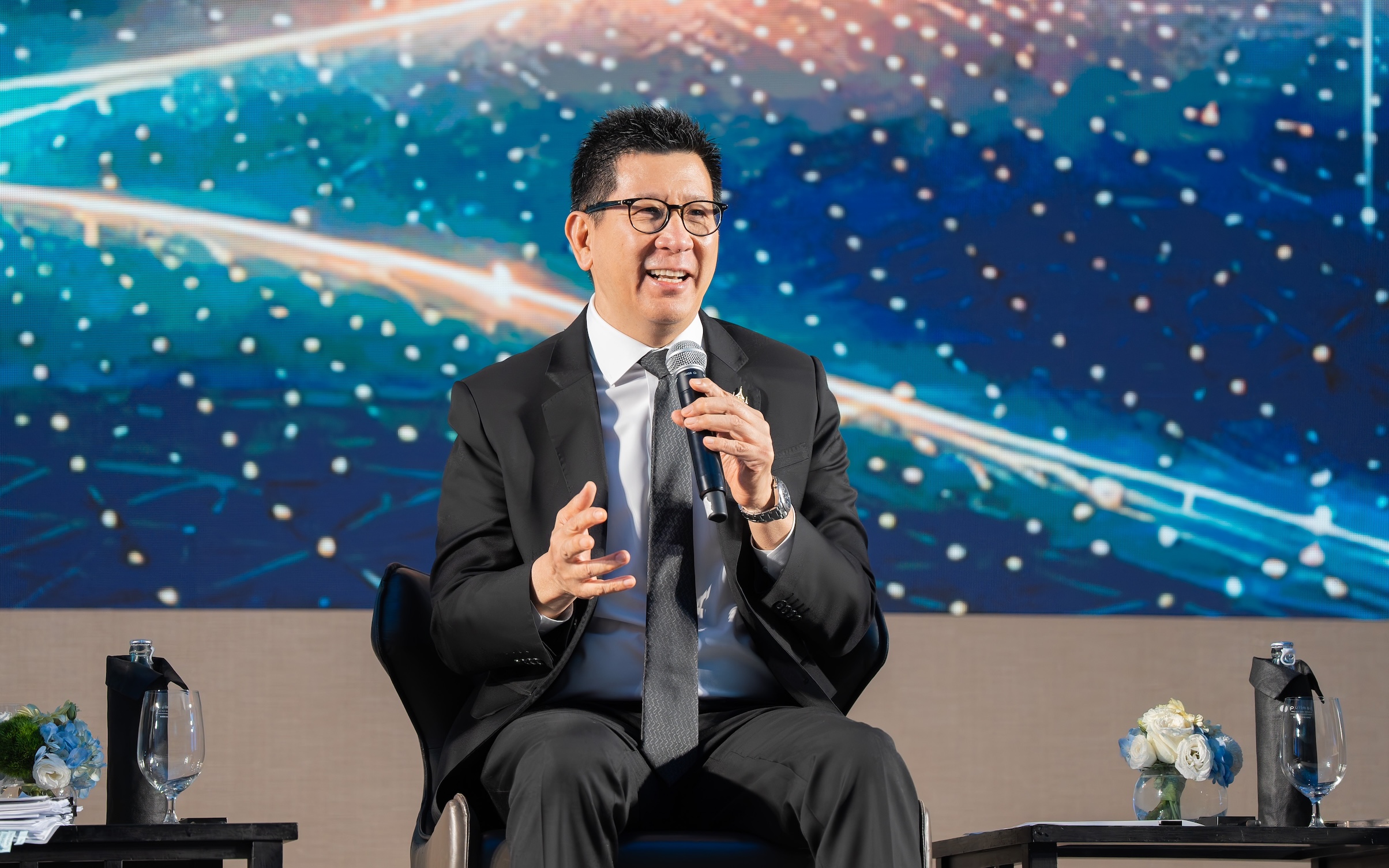
Dr. Ekniti Nitithanprapas, Deputy Prime Minister and Minister of Finance, stated during a keynote interview titled “Fiscal Policy’s New Horizon: Empowering People, Building Economic Resilience” that the government is committed to strengthening the national economic foundation through three primary targets: accelerating GDP growth beyond 3%, propelling Thailand’s global competitiveness into the top 20, and increasing investment to exceed 30% of GDP. Focus will be placed on attracting high-tech S-Curve industries, facilitating technology transfer, and integrating Thai entrepreneurs into global supply chains—positioning the nation to capitalize on hosting the 2026 IMF–World Bank Group Annual Meetings on 12 – 18 October.
Dr. Ekniti introduced a proactive economic framework governed by the 5T Strategy to build tangible economic immunity:
- Target: Budgetary spending precisely directed at specific target groups.
- Transition: Accelerating the shift toward clean energy and a Green Economy.
- Transformation: Investing in infrastructure, human capital, and regulatory reforms.
- Transparency: Utilizing digital technology to open public data transparently.
- Together: Synergizing efforts across the public sector, private industry, financial institutions, and academia via Public-Private Partnerships (PPPs) and Infrastructure Funds to drive economic growth.
“The 5T Strategy will serve as a vital mechanism to upgrade Thailand’s economic structure, ensuring agility and resilience against multidimensional challenges,” said Dr. Ekniti. “This forms the bedrock of our national theme, ‘Thailand’s New Horizons: Empowering People, Building Resilience,’ showcasing Thailand’s leadership role in the global economic landscape while aligning with our narrative as host nation for the 2026 Annual Meetings.”
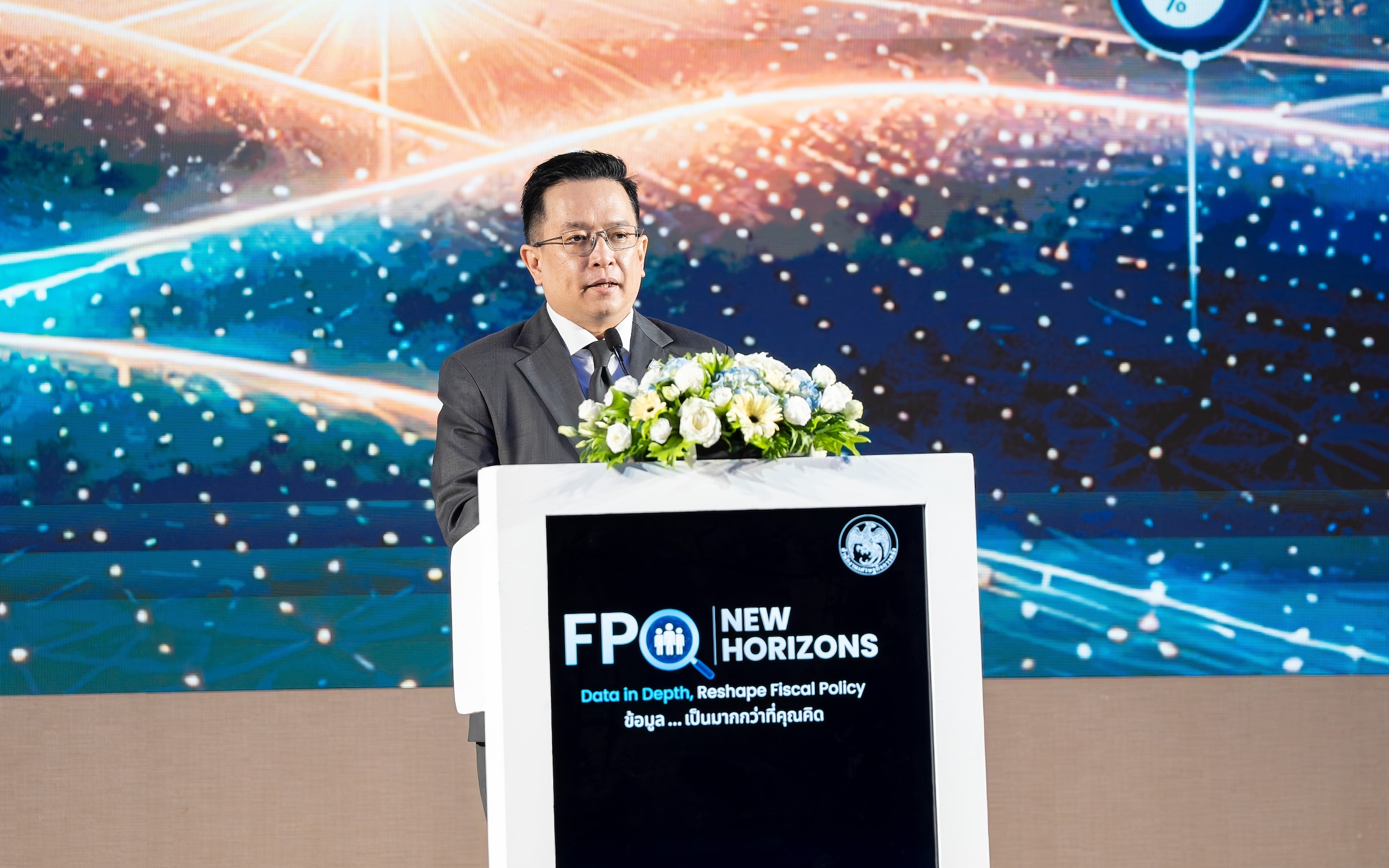
Dr. Vinit Visessuvanapoom, Director General of the Fiscal Policy Office, highlighted the FPO’s operational readiness toward sustainable fiscal policy: “The FPO is establishing a strategic roadmap toward becoming a Data-Driven Fiscal Policy Agency, utilizing evidence-based insights to design fiscal measures. By tapping into the MOF Data Lake—encompassing over 63.4 million citizens—and deploying cutting-edge analytical tools like the Provincial Misery Index (PMMI), the Personal Financial Condition Index (PFCI), the Thailand Pain Point Heat Map, and the Ari Credit Score which leverages Machine Learning to improve access to credit for SMEs and self-employed individuals.”
This advanced data ecosystem enables the government to craft tailored fiscal solutions that meet specific individual needs, optimizing budget allocation and reducing long-term fiscal burdens while ensuring equitable benefit distribution across all segments of society.
“Today, the FPO categorizes socio-economic vulnerabilities across areas—much like triage in healthcare (Green, Yellow, and Red groups)—to deliver tailored, precision assistance,” Mr. Vinit added. “Concurrently, we are engaging the next generation through the Young Fiscal Policy Designer 2026 project, allowing young minds to co-design future-proof policies and observe the 2026 IMF–World Bank Group Annual Meetings firsthand.”
Dr. Santitarn Sathirathai, Vice-Minister of Finance, contributed to the panel discussion “From Vision to Mission: Building Economic Immunity,” noting that as the global economic landscape shifts focus toward security and stability, Thailand must rapidly cultivate new S-Curve industries. He outlined a three-pillar strategy—“Stabilize Today, Transition Now, and Invest for Tomorrow”—to build structural immunity, preparing Thailand to present its resilient, sustainable economic roadmap to financial leaders worldwide at the upcoming Annual Meetings.
The FPO Symposium 2026 and the success of the integration of deep data analytics mark a major milestone for the Ministry of Finance. It demonstrates Thailand’s people-centric, targeted fiscal policies grounded in long-term fiscal discipline, while reinforcing the nation’s readiness to share actionable development experiences with the international community as host of the 2026 IMF–World Bank Group Annual Meetings this October.
The FPO Symposium 2026 and the successful integration of deep data insights mark a key milestone reflecting the FPO’s role in elevating Data-Driven Fiscal Policy. This also highlights the readiness of the Ministry of Finance and the nation to drive targeted, people-centric fiscal policies grounded in long-term fiscal discipline and sustainability. As host of the upcoming 2026 IMF–World Bank Group Annual Meetings, Thailand stands poised to share actionable development experiences with the international community this October.