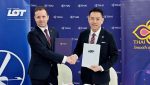
Mr. Chula Sukmanop, Secretary General of the Eastern Economic Corridor Office, disclosed on the progress of the Aircraft Maintenance, Repair and Overhaul Center (MRO) project and other related businesses in the Eastern Economic Corridor (EEC) at U-Tapao Airport, stating that Thai Airways International Public Company Limited (SET: THAI) has already informed U-Tapao International Aviation Company (UTA), which consisting of Bangkok Airways Public Company Limited (SET: BA) holds 40%, BTS Group Holdings Public Company Limited (SET: BTS) holds 40%, and Stecon Group Public Company Limited (SET: STECON) holds 20% that THAI confirms its intention to use the original 210-rai site allocated earlier by the EEC Office as the location for its MRO project. THAI will not relocate its investment site as previously proposed by UTA.
THAI is preparing to propose the MRO project to its board of directors on June 15, 2026. If approved, it is expected that the signing of the land lease agreement with the EEC Office can be completed within this year. This will enable the commencement of design, procurement of various partners, and customer acquisition, with the goal of becoming a world-class aircraft maintenance center. Construction is expected to begin in 2027 and will take 2-3 years to complete, aiming to be ready for service at the same time as the second runway at U-Tapao Airport, which is currently under construction.
Meanwhile, the EEC Office also has a plan to develop an additional 70-rai area adjacent to the MRO project, divided into a 30-rai area to accommodate private jets, expected to commence after the MRO project contract is signed as the Terms of Reference (TOR) drafting process for the private jet area at U-Tapao Airport does not require much time. The goal is to open for service alongside Runway 2 and the MRO. The remaining 40-rai will be considered for relevant supporting activities.
Previously, Mr. Chai Eamsiri, Chief Executive Officer of THAI, revealed to “Kaohoon” that he is confident THAI will be able to sign the contract and commence the development of the MRO project within this year. He also confirmed that THAI will not delay or postpone the MRO investment at U-Tapao Airport, despite the impacts from the ongoing Middle East conflict. The MRO project is crucial for the maintenance of THAI’s expanding fleet from now on.
The MRO development project is valued at 10 billion baht, with THAI set to lease 210 rai from the EEC for 50 years, constructing a total of 6 hangars in 2 phases. The first phase will see construction of 3 hangars together with related infrastructure, with an investment of 6 billion baht and a construction period of approximately 3 years.
The second phase will add 3 more hangars with a lower investment, as essential infrastructure will already have been constructed in the first phase. The MRO facility can accommodate both wide-body and narrow-body aircraft, providing maintenance services ranging from Light Maintenance to Overhaul for all airlines.
THAI’s main objective for investing in the MRO is to support its new fleet, which is expected to expand to 150 aircraft by 2033. The remainder of the capacity will be used to service other customers. Initially, the center will be able to handle maintenance for 90 aircraft per year, with Thai airlines as the primary clients. This is expected to generate annual revenue of 4-5 billion baht, with additional hangars being added to meet increasing demand.
THAI will provide returns to the EEC in two forms: 1) land rental fees and 2) profit sharing, using a stepped revenue-sharing model. During years 1-4, only land rental will be paid; revenue sharing will start in year 5, set at 3% in years 5-10, 5% in years 11-15, and 7% from year 15 onwards.