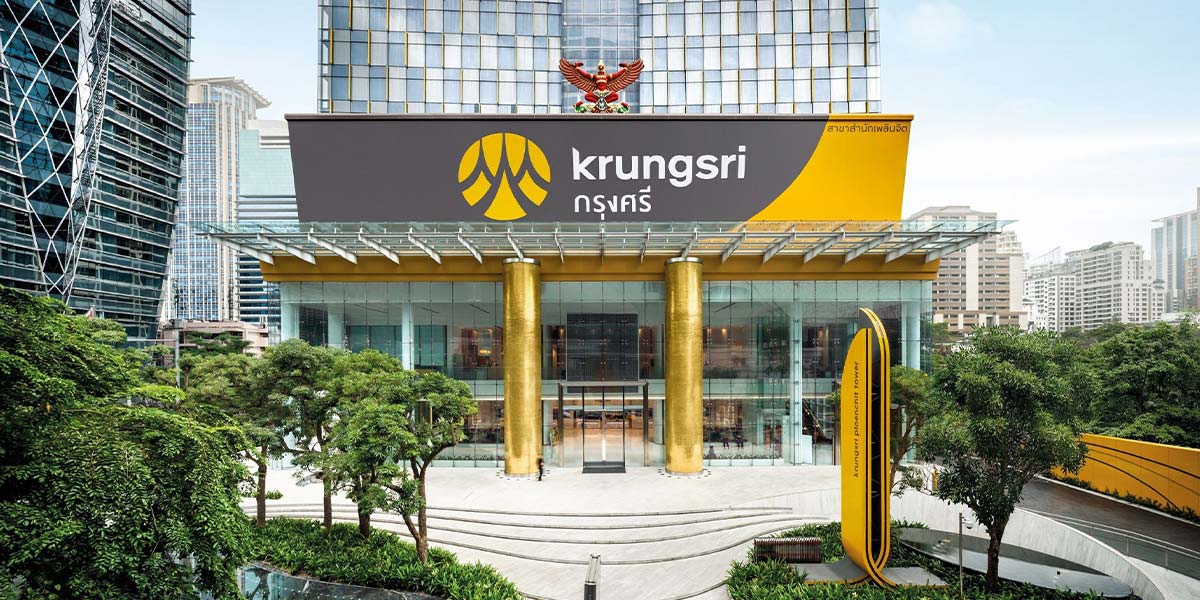
On Tuesday, the share price of Bank of Ayudhya Public Company Limited (SET: BAY) at the time of 11:00 a.m. was at THB 42.50, a THB 3.25 or 7.1% decrease with a total trading value of THB 221.29 million.
The slump in BAY’s share price came after the company delivered a steady performance for the second quarter of 2026. The bank reported a net profit of THB 8,294 million, remaining essentially unchanged from the THB 8,295 million recorded in 2Q25. While the bottom line was flat, the result reflects a period of significant top-line expansion offset by higher operating costs and a cautious approach to risk management.
Operating income surged 11.4% year-on-year to THB 42,143 million. A major driver of this growth was net interest income (NII), which rose 10.9% to THB 28,756 million. This increase was underpinned by robust growth in the corporate and ASEAN loan portfolios, as well as the consolidation of higher-yielding TIDLOR loans. Complementing this, non-interest income climbed 12.5% to THB 13,387 million, fueled by healthy net fees and service income from both domestic and regional operations.
However, these gains were countered by rising expenses. Operating expenses jumped 16.8% year-on-year to THB 19,341 million, primarily due to the consolidation of TIDLOR and annual salary adjustments. Furthermore, the bank maintained a disciplined stance on asset quality, recording expected credit losses (ECL) of THB 11,360 million, representing a 10.4% increase from 2Q25.
On the balance sheet, total loans outstanding stood at THB 1,936,689 million as of June 30, 2026. Reported growth was 0.4% year-to-date, though this was impacted by the accounting deconsolidation of PT Home Credit Indonesia (HCID); excluding this impact, underlying loan growth was 0.8%.
Asset quality showed clear signs of improvement, with the NPL ratio falling to 3.08% from 3.39% a year earlier, aided by the sale of THB 3,653 million in non-performing loans during the quarter. Consequently, the loan loss coverage ratio strengthened to 137.9%, up from 122.8% in 2Q25. With a solid Capital Adequacy Ratio of 20.20%, Krungsri remains well-positioned to navigate a moderating economic backdrop.