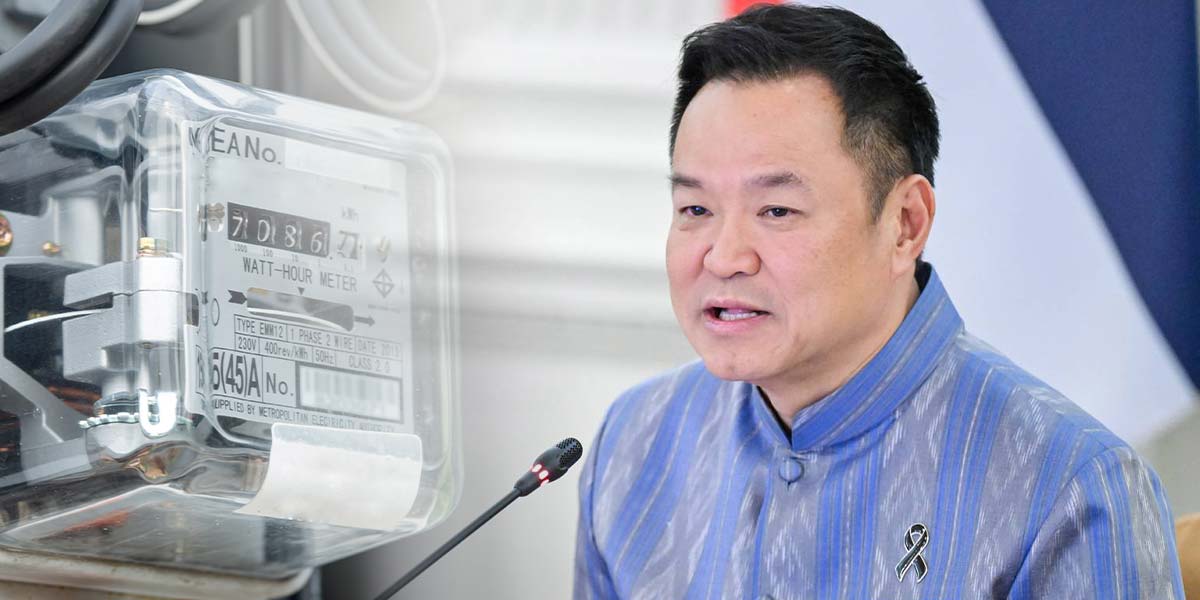
Rachada Dhnadirek, spokesperson for the Office of the Prime Minister, revealed that on July 15, the National Energy Policy Council (NEPC) meeting, chaired by Prime Minister Anutin Charnvirakul, approved key energy measures. These include restructuring electricity rates to ease the cost of living burden for citizens and upgrading the nation’s electricity infrastructure to support data center investments. The main points are as follows:
1) Electricity Rate Structure Adjustment (2026-2030)
The meeting approved Thailand’s electricity rate structure policy for 2026 – 2030, introducing a progressive rate for residential users. The first 1-200 units of consumption will be charged at 3 baht per unit, while usage of 201-400 units and above 401 units will retain the existing rates.
Additionally, the meeting agreed to separate the costs of public electricity, such as street lighting, from rates billed to general users and to set a new, specific rate for such costs. The Energy Regulatory Commission (ERC) was tasked with amending laws and regulations related to the Power Development Fund to allow collection of funds from new sources.
Furthermore, the definition of residential electricity users will be expanded to cover rental accommodation businesses, such as rental houses, dormitories, apartments, and homes without house registration. Currently, these are subject to higher temporary rates; they will now qualify for residential rates. This aims to alleviate the financial burden for tenants, most of whom are students and laborers.
2) Guaranteeing Grid Access for Data Centers
The meeting endorsed the implementation of guarantees for data center operators to access the power grid, confirming readiness and real investment intentions before the government invests in expanding the electricity system. Operators are required to prepare water management plans, as this sector consumes significant water for cooling systems.
This measure aims to prevent unnecessary infrastructure investment that could burden general electricity users and to avoid water resource conflicts with the public and agricultural sectors.
3) Unlocking Clean Electricity Trade via Direct PPAs
The meeting approved lifting restrictions on the purchase and sale of renewable energy through direct Power Purchase Agreements (Direct PPA). This will allow third-party access (TPA) to the electricity grid, covering both data centers and industries seeking clean energy usage.
This measure enables operators to procure clean electricity directly from producers, aligning with increasingly stringent international trade standards on clean energy use and opening up the clean electricity market towards liberalized competition.
Rachada stated that the Prime Minister proposed establishing a joint committee between energy sector agencies and Deputy Prime Minister Pakorn Nilprapunt, to discuss creating specific legislation to regulate data centers in Thailand. Given the sector’s rapid expansion, comprehensive considerations are needed regarding large-scale electricity consumption, relevant laws, environmental impacts, and noise pollution from operations.