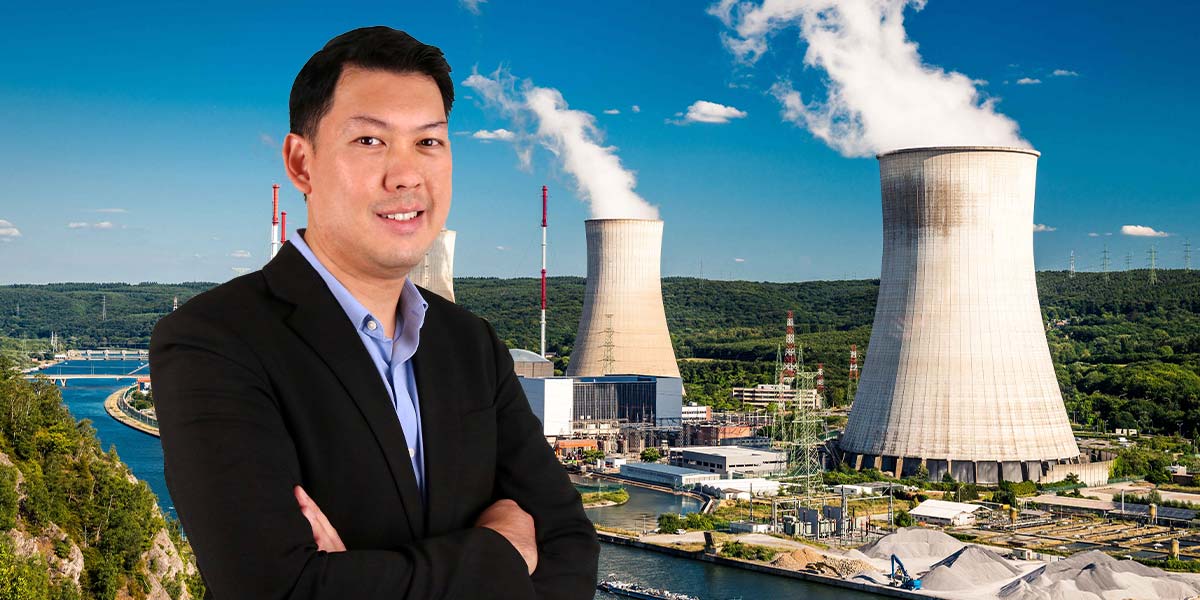
Mongkol Somphol, Energy, Resources & Industrials Industry Leader, Deloitte Thailand, noted that the Energy, Resources, and Industrials (ER&I) sectors form the foundation of economies. According to World Bank data, industry—including manufacturing, mining, electricity, water, and construction—accounts for about 32% of Thailand’s GDP, making it one of the most important drivers of the national economy. (Statbase)
Yet today, the ER&I is facing a turning point. Structural shifts in technology, supply chains, energy transition, and geopolitics are forcing companies to revise their strategies. Deloitte’s latest industry outlooks highlight a clear message: the sector can no longer rely on traditional operating models. Instead, it must transform rapidly to be competitive in a more volatile and complex environment.
Challenges Reshaping the ER&I Landscape
Across global ER&I, companies face a growing set of structural pressures.
- Infrastructure Bottlenecks and Supply Chain Constraints
According to Deloitte’s 2026 Power and Utilities Industry Outlook, one of the most urgent challenges is the growing strain on industrial infrastructure. The lead times for critical grid components, such as transformers and switchgear, have stretched to multiple years, reflecting global supply disruptions and rising demand for energy infrastructure.
As renewable generation expands and electrification accelerates, electricity grids must handle higher loads and more variable power sources. The challenge is not simply building more power plants—it is modernising the entire energy system, from transmission networks to storage systems.
For ER&I companies, this means capital investments are rising dramatically. In many markets, the cost of new energy infrastructure projects has surged compared with just a few years ago, putting pressure on balance sheets and project economics. Companies must therefore manage growth ambitions with financial discipline.
- The Energy Transition and Decarbonisation Pressure
The worldwide shift towards low-carbon energy is another major disruption for ER&I industries. Governments and investors are demanding lower emissions, while customers increasingly prefer sustainable supply chains.
For companies in fossil-fuel-heavy sectors—such as petrochemicals, cement, steel, and oil and gas—this transition is particularly complex. Decarbonisation often requires expensive technological upgrades, including the electrification of processes, carbon capture technologies, and the use of alternative feedstocks.
In Thailand, where natural gas still dominates electricity generation and fossil fuels remain embedded in industrial production, the challenge is even more pronounced. Transitioning toward cleaner energy systems while upholding economic competitiveness will require massive investment and careful planning.
- Digital Transformation and AI-Powered Operations
The industrial sector is increasingly formed by digital technologies—from AI-enabled predictive maintenance in power plants to advanced analytics in supply chain management.
We found that many ER&I executives now see AI-driven decision-making and data-driven operations as essential capabilities. However, legacy systems, fragmented data ecosystems, and workforce skill gaps often slow adoption.
This digital gap creates a strategic dilemma. Companies that move too slowly risk losing competitiveness to more agile players. Yet adopting new technologies calls for major organisational change and investment.
Our Perspective: Reinventing the ER&I Business Model
In response to these pressures, ER&I companies must rethink their operating models in several key ways.
- From Cost Optimisation to Resilience
Traditionally, industrial companies focused heavily on cost-effectiveness and lean supply chains. But recent upheavals—from pandemic-era shortages to diplomatic strains—have exposed the weakness of highly optimised systems.
Resilience must now become a strategic priority. This means diversifying supply chains, localising the production of critical equipment, and building redundancy into infrastructure networks. In short, reliability may now matter as much as efficiency.
- Capital Discipline in an Investment-Heavy Era
The energy transition, infrastructure modernisation, and digital transformation all require enormous capital investment. As a result, ER&I companies must become more disciplined in their resource allocation.
We found that CFOs in the sector are increasingly focusing on scenario planning and portfolio optimisation to navigate unstable market conditions. Investments must be carefully prioritised—not only based on financial returns but also on strategic alignment within a rapidly evolving industry environment.
- Turning Energy Companies into Infrastructure Platforms
Another shift is the transformation of traditional energy companies into broader infrastructure platforms.
Electricity providers, for example, are no longer simply utilities selling power. They are becoming operators of complex energy ecosystems that integrate renewable generation, storage systems, distributed resources, and digital grid technologies.
Similarly, industrial companies are moving toward integrated platforms that combine manufacturing, logistics, and digital services. This convergence of industries blurs traditional sector boundaries and creates new opportunities—but also new competitive threats.
The Imperative to Act
The ER&I sector has long been associated with stability and long investment cycles. Power plants operate for decades; industrial facilities are designed for long-term productivity; energy supply systems are built slowly and methodically. But the industry is entering a new era of accelerating change. Infrastructure bottlenecks, energy transition pressures, digital disruption, and geopolitical uncertainty are joining forces to reshape the sector. Players who continue to rely on traditional operating models may find it difficult to keep pace. Those that succeed will be those who embrace transformation—rethinking supply chains, modernising infrastructure, adopting digital technologies, and building resilience into every part of their operations.
For Thailand and many other industrial economies, the stakes are high. ER&I sectors are not just another industry segment—they are the foundation of economic productivity. And in an increasingly uncertain world, making sure that foundation remains strong may be one of the most important strategic challenges of the decade.