
A new study by Deloitte, supported by Thailand Capital Market Development Fund (CMDF), highlights mounting structural pressures facing Thailand’s brokerage industry and outlines a strategic roadmap to strengthen the sector through consolidation, regulatory reform, and broader capital market development.
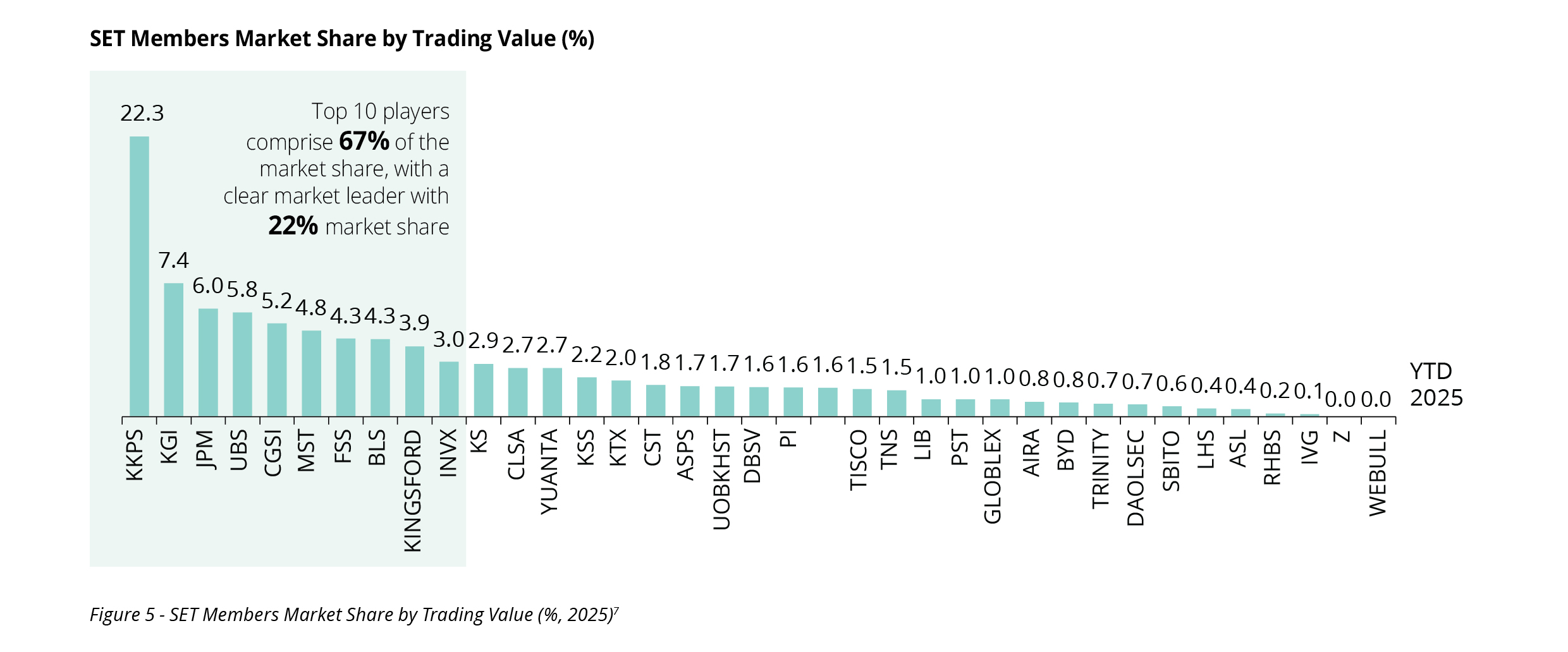
The report, A Study of the Brokerage Business in Thailand, finds that the industry has faced sustained pressure in recent years due to declining trading volumes, prolonged margin compression, rising operating costs, and rapidly evolving investor behavior. These challenges are compounded by broader capital market dynamics, including weakened investor confidence, a limited pipeline of high-quality issuers, and an underdeveloped private capital ecosystem.
Drawing on quantitative surveys, industry interviews, and regional benchmarking, the study assesses the key challenges confronting the sector and identifies opportunities to build a more resilient capital market ecosystem.
Key highlights of the study include:
- Strategic consolidation can strengthen the industry – The study supports mergers and acquisitions (M&A) as a key response to fragmentation in Thailand’s brokerage sector. Consolidation can help strengthen balance sheets, improve operational efficiency, and enable investment in technology and innovation. However, the objective is not simply fewer brokers, but stronger and higher-quality intermediaries.
- A balanced brokerage ecosystem is essential – International experience suggests that capital market efficiency is best supported by a “barbell” structure consisting of a small number of well-capitalized brokers providing market stability and liquidity, alongside specialized and digital players competing in areas such as advisory services, product innovation, and technology-enabled investment access.
- Capital market reform must extend beyond brokers – Brokerage consolidation alone will not revitalize the market. Broader ecosystem reforms—including stronger investor protection, deeper private capital markets, improved market infrastructure, and enhanced financial literacy—are needed to restore investor confidence and expand market participation.
“Thailand’s capital market is facing significant challenges, including declining trading volumes, compressed business margins, and a large number of brokerage firms—particularly smaller players—that lack the scale or resources to invest in technology and talent at the pace the market now demands. We stand at a critical turning point for the industry and must choose its future direction wisely. This research serves as a compass to guide that decision” said Mr. Boonsom Jarusiritarangkul, Strategy, Risk and Transactions Partner, Deloitte Thailand.
The study emphasizes that consolidation should be guided rather than forced. Regulatory frameworks should encourage scale where economically necessary while preserving opportunities for smaller, specialized, and digital brokers to compete in targeted segments.
“Mergers will be an important step for the industry. Consolidation can help improve efficiency and strengthen the capabilities of brokerage firms. However, the goal is not merely to reduce the number of brokers, but to build stronger and better ones,” said Dr. Metinee Jongsaliswang, Country Managing Partner at Deloitte Thailand.
Beyond brokerage restructuring, the report highlights the importance of strengthening Thailand’s broader capital market ecosystem. Weak investor participation, declining trust, and a shallow pipeline of issuers cannot be addressed through intermediary consolidation alone.
To support long-term market development, the study outlines six priority areas for reform, including a shift toward a more principles-based regulatory approach, development of Thailand’s private equity and venture capital ecosystem, improvements in market infrastructure, stronger investor protection mechanisms, and nationwide financial literacy initiatives.
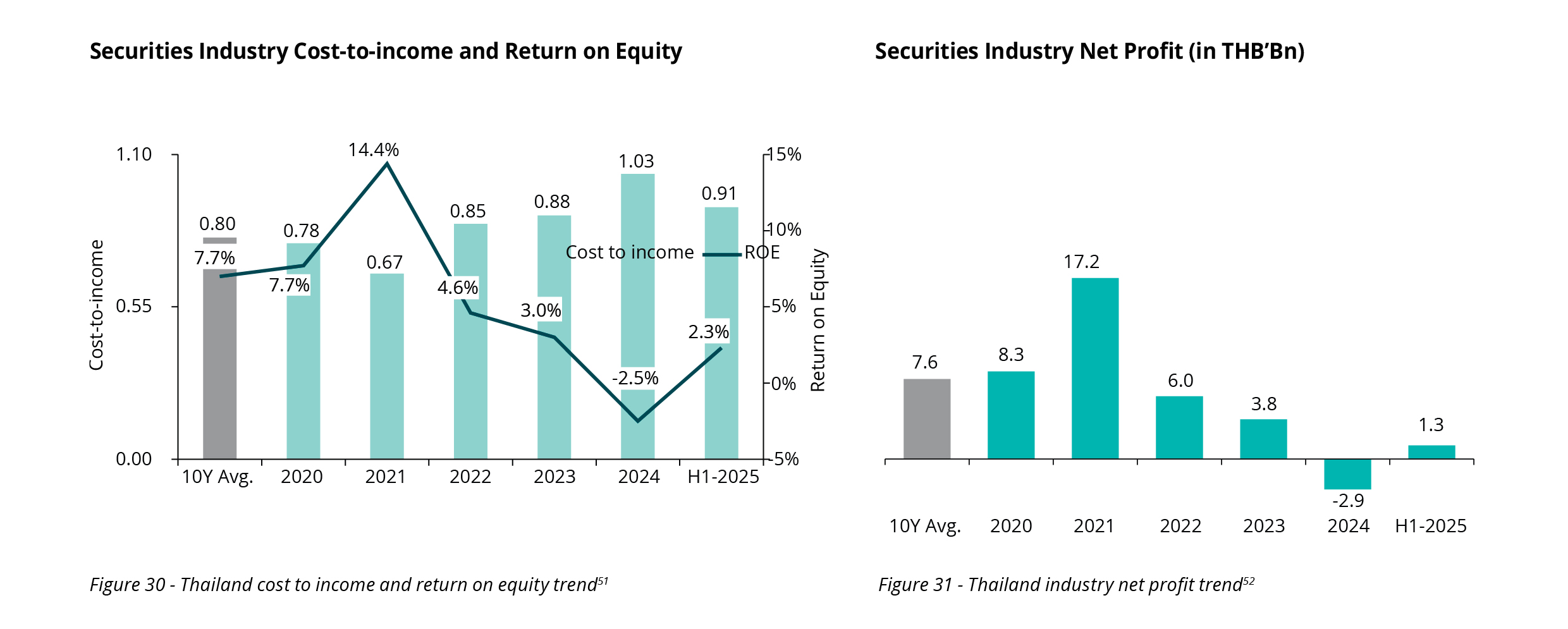
“Thailand’s securities industry is at a critical turning point. The structural challenges we face today are not merely constraints—they represent an opportunity for meaningful reform across the entire ecosystem, from industry consolidation and regulatory enhancement to strengthening the broader capital market environment. With sustained and coordinated efforts, Thailand’s capital market has the potential to emerge stronger, more transparent, and more competitive in the decade ahead,” said Dr. Metinee
If successfully implemented, Dr. Metinee concluded Thailand could develop a smaller but more capable brokerage ecosystem operating within a deeper and more trusted capital market by 2030. A balanced mix of scaled intermediaries and specialized players—supported by stronger investor confidence and a healthier issuer pipeline—would position Thailand’s capital market to better support domestic economic growth while remaining attractive to global capital.
“This research does not aim only to analyze the current state of Thailand’s capital market, but also to look ahead and design a concrete transition pathway toward 2030,” said Juckchai Boonyawat, President of CMDF.
“One key finding is that the development of Thailand’s capital market cannot rely solely on consolidation or a reduction in the number of market participants. Instead, progress must be pursued in an integrated manner across several dimensions. These include transforming the role of regulators from procedural gatekeepers to enablers of development, upgrading shared market infrastructure, restoring investor confidence and strengthening investor protection mechanisms, as well as systematically enhancing financial literacy among the public over the long term—an effort that requires collaboration from all stakeholders.”