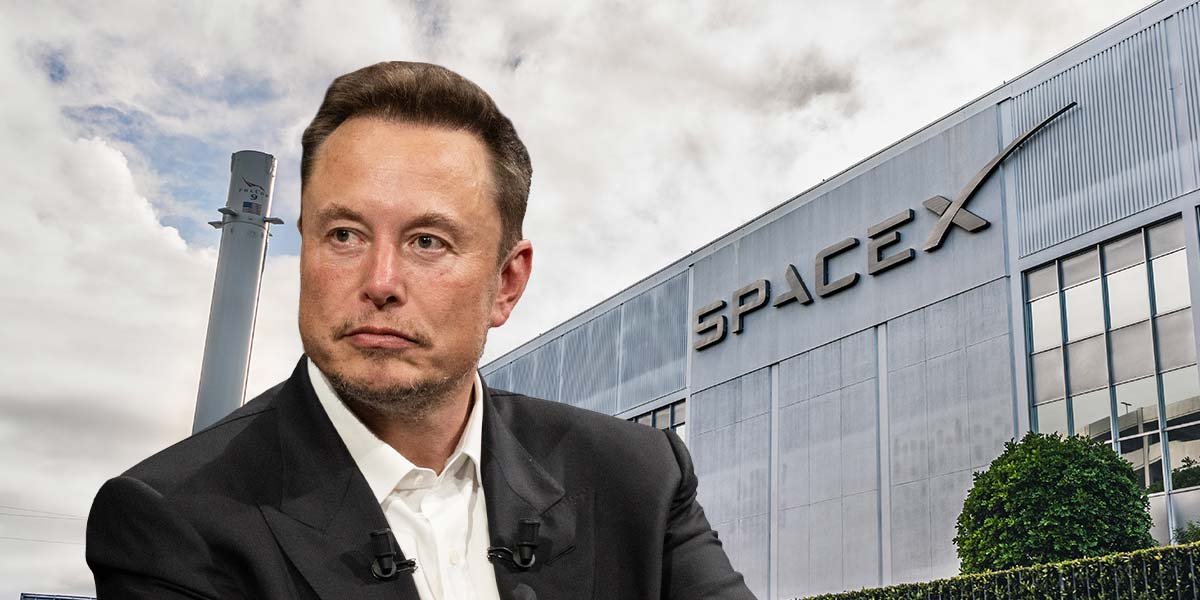
Elon Musk addressed a virtual session of the G20 yesterday, laying out his views on the power constraints facing artificial intelligence, AI’s potential to boost the global economy, the trajectory of humanoid robotics, and how governments should regulate new technology.
Power And Bottleneck
Musk said there is already a power crisis for AI — not a problem still on the horizon. He cited a consensus estimate of at least a 15 gigawatt shortfall of power in 2027 for AI chips. He explained that AI chip production is rising roughly 40–50% a year, while power generation outside China is rising only about 10–20% a year. He argued the faster curve will overwhelm the slower one.
Musk said Google, Anthropic, and others are already leasing compute from SpaceX because SpaceX built its own power plants — which he said was the only way they could turn on capacity fast enough.
He noted that China has abundant electricity, but GPU export bans block the latest chips from reaching the country. In his view, the real constraint is electricity growth outside China. Musk framed this as an opportunity for other countries: build large amounts of power generation, host AI data centers, and tax them or charge reasonable fees.
AI as a Growth Engine
Musk said countries should lean into new technology rather than staying stuck in the past. He offered a rough estimate that digital AI alone could lift the global economy by 20–30%, or about $20–30 trillion a year. By the end of next year, he said, AI should be able to do anything digital — anything that does not require physically shaping atoms by hand.
On software specifically, Musk predicted that in about 12–18 months, AI writing software will reach “Stockfish-level,” meaning humans will not be able to compete — much the way a chess engine on a phone can already beat Magnus Carlsen, a five-time World Chess Champion. He said the same window applies to AI becoming extremely good, possibly at that same level, at all forms of engineering and anything digital.
Musk also promoted X as the platform where he said almost all serious AI discourse happens, and said that’s how he follows the field day to day.
Robotics and Physical AI
Musk said physical technology always takes longer to develop than digital technology, because software can be copied instantly while hardware requires large global supply chains and moving significant amounts of physical material.
He described a humanoid robot’s usefulness as the product of three factors multiplied together: AI software, the onboard AI chip, and electromechanical dexterity — especially in the hands. He said all three are improving exponentially.
Once robots start making more robots, he said, growth becomes recursive: slow at first, then explosive.
Looking ten years out, Musk offered a forecast he called conservative: well over a billion humanoid robots, each about five times as productive as a human. He said that would mean robots outproduce all humans combined.
He said that the physical layer is where he expects the economy to grow by a factor of 10 or more — not just the 20–30% he attributed to digital AI alone.
Default Legal Not Default Illegal
Musk argued that new technologies should be default legal, not default illegal. He pointed to the European Union as an example of heavy regulation, saying it doesn’t ultimately stop progress but slows it considerably. He compared startups to saplings in a forest, saying most governments over-support the big, existing trees — incumbents — while under-supporting the small ones. Musk said big companies have access to political leaders in a way startups don’t, and argued that policy should be deliberately biased toward young companies.