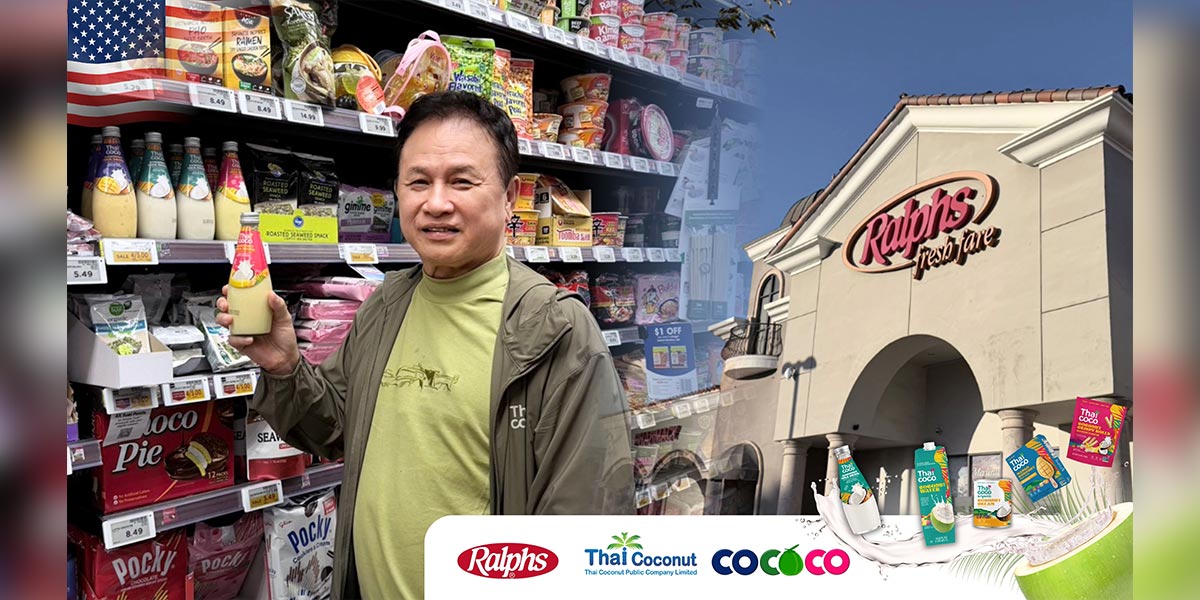
Dr. Worawat Chinpinkyo, Chief Executive Officer and Managing Director of Thai Coconut Public Company Limited (SET: COCOCO), revealed that the company sees growth opportunities in the coconut beverage market in the United States, which still has high growth potential due to the trend of consumers placing greater importance on health-focused beverages and natural products. This has resulted in products such as coconut water and plant-based beverages becoming one of the fastest-growing categories in the global beverage market.
Last year, revenue from the U.S. accounted for approximately 31.94% of total revenue, representing a 36.9% growth from the previous year. This year, the company is aggressively expanding in the U.S. market, targeting revenue growth at around 12%, aiming to increase the proportion of sales from coconut-based beverages and coconut milk products, especially in the organic category, which is gaining popularity among health-conscious consumers in America.
For its growth strategy, the company places significant emphasis on driving branded products, which are expected to grow by approximately 25% through the expansion of sales channels into major U.S. retail chains. The company’s products have started to be available in leading supermarkets such as Kroger, Albertsons, Fred Meyer, and Safeway—large retail networks that reach consumers in many states nationwide.
Dr. Worawat further stated that the company sees significant growth opportunities in the U.S. market, now that tariff measures and international trade restrictions are starting to ease, resulting in a more stable international commerce environment. The company plans to continue market expansion and increase brand awareness in the U.S. by strengthening its presence in retail channels and business partnerships to boost product recognition and expand the customer base in this high-potential market.
Meanwhile, COCOCO also possesses a key strength in its fully-integrated supply chain—from sources of raw materials, a network of farmers, standardized production processes, to the export system—which supports the company’s competitiveness.