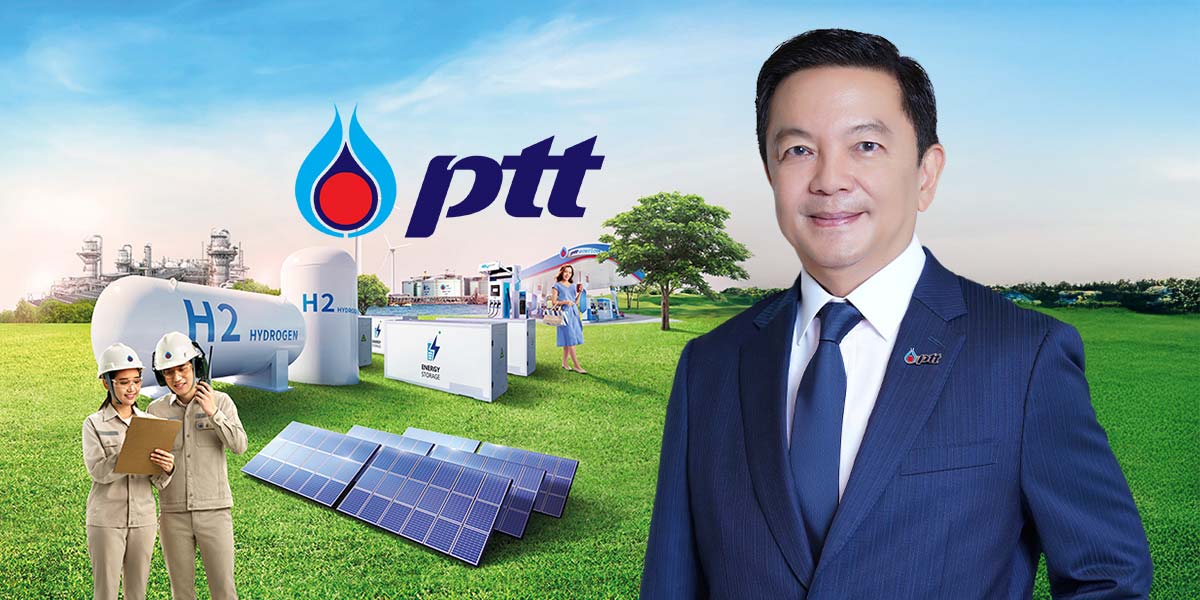
Dr. Kongkrapan Intarajang, President and CEO of PTT Public Company Limited (SET: PTT), stated that the company’s performance is expected to improve in the second quarter of 2026 and in the second half of the year, supported by the petroleum exploration and production (E&P) business, with the average selling price for PTT Exploration and Production (SET: PTTEP) anticipated to increase in line with higher global energy prices.
In addition, both the petrochemical and trading businesses are projected to perform better, while the refining segment will depend on trends in global oil prices.
Regarding the LNG trading business, PTT has set a target to increase volumes to approximately 3 million tonnes in 2026. The company is actively expanding its portfolio with the ambition to become a global LNG player, aiming to reach 10 million tonnes per year by 2030 and 15 million tonnes per year by 2035.
In the petrochemical and refining businesses, PTT, as a shareholder in PTT Global Chemical (SET: PTTGC), supports the ongoing study of business collaboration between PTTGC and SCG Chemicals (SET: SCGC) in the olefins and polyolefins sector. A conclusion is expected within the third quarter of 2026.
PTT has managed recent instability in the Middle East by leveraging its established international business network, with offices around the world enabling a quick adjustment in crude oil sourcing to replace volumes from the Middle East. Additionally, PTT Group’s refineries have invested over THB 111 billion in the past five years, enhancing their equipment reliability and flexibility to process crude oil from diverse sources. Regular emergency drills also ensure that the group can promptly respond to crises.
As for the search for partners in the petrochemical and refining businesses—which includes PTTGC, Thai Oil (SET: TOP), and IRPC (SET: IRPC)—PTT is in discussions with global partners. However, the process may be delayed due to changes in the global energy landscape, requiring more detailed and careful consideration of investments in current market conditions, especially given ongoing instability in the Middle East. Nonetheless, PTT will strive to finalize a framework within this year.
Concerning government intervention in ex-refinery prices, PTT believes this will be a short-term measure. While the group’s refining segment performed well in the first quarter of 2026, further monitoring is needed for the second quarter and the remainder of the year.
Regarding the Ministry of Energy’s consideration of permitting the export of jet fuel (Jet A-1), PTT views this as a positive step to help reduce domestic inventory surpluses. However, shifts in global demand patterns and increased exports by several countries must be considered.
On the issue of the Department of Special Investigation (DSI) examining the refineries, PTT, as a shareholder in TOP, PTTGC, and IRPC, has a supervisory committee in place to ensure transparency and clarity.
Dr. Kongkrapan also added that, on May 15, the Prime Minister hosted the “Entrepreneurs Speak, Government Listens” forum at Government House, where PTT proposed measures to enhance energy security, prioritized the acceleration of new petroleum exploration and production, particularly in the Andaman field, and recommended concession renewals.
PTT Group has closely monitored and managed the country’s energy security, establishing the PTT Incident Command System (PTT ICS) to ensure business continuity and energy security throughout the supply chain during crises. For over two months, PTT Group refineries operated at over 100% capacity under safety standards, while the group’s petrochemical operations ran at full capacity, ensuring a continuous feedstock supply for the downstream plastic and chemical industries.
PTT also adjusted its plan for sourcing and producing natural gas, ensuring continuous delivery to power plants and industries. This included procuring spot LNG from non-Middle Eastern countries as mandated by the government and postponing maintenance of Gas Separation Plant Unit 6 to maintain full operation across all units. As a result, gas could be supplied to power plants and LPG production could proceed as planned, fulfilling domestic demand.
During the crisis, PTT managed financial liquidity to safeguard the nation’s energy security. In response to soaring global oil prices, PTT arranged an additional THB 230 billion in liquidity, including margin calls of about THB 63 billion, working capital for procurement of approximately THB 137 billion, and about THB 35 billion in outstanding fuel fund compensation. This led to an increase in financial costs of over THB 600 million per month, or about THB 7 billion per year. All information was transparently disclosed and reported to the relevant authorities and stakeholders.
PTT also continued implementing Profit Enhancement Initiatives to strengthen operational resilience within the group, reflected in the over THB 3 billion net profit in the first quarter. This includes progress on the MissionX project and the ongoing Digital Transformation through the AXIS initiative, which focuses on deploying digital tools and AI to enhance efficiency.
Additionally, PTT has bolstered supply chain and marketing collaboration domestically and internationally through the P1 and D1 projects, and launched the Asset Monetization (A1) project to optimize the utilization of group assets. The company has also focused on Financial Excellence (F1) to maintain financial discipline and manage group-wide cash flow effectively, laying a solid foundation for sustainable growth and long-term shareholder value creation.
Mr. Sarawut Kaewtatip, Director-General of the Department of Energy Business, stated that the Ministry of Energy is currently considering permitting the export of jet fuel (Jet A-1) to manage surplus domestic supply. Export permission will be based on domestic inventory levels remaining above the minimum safety threshold. If volumes exceed the set reserve, exports may be permitted—potentially as early as June 2026. Countries expressing interest in importing Thailand’s Jet A-1 include Laos, Myanmar, Vietnam, and the Philippines.
Currently, Thailand’s daily demand for diesel and Jet A-1 is 70 million liters, while required total reserves are about 300 million liters (17–20 days’ supply). As domestic production exceeds this reserve margin, export of the surplus is permitted to ease storage concerns and support continued efficient refinery operations.