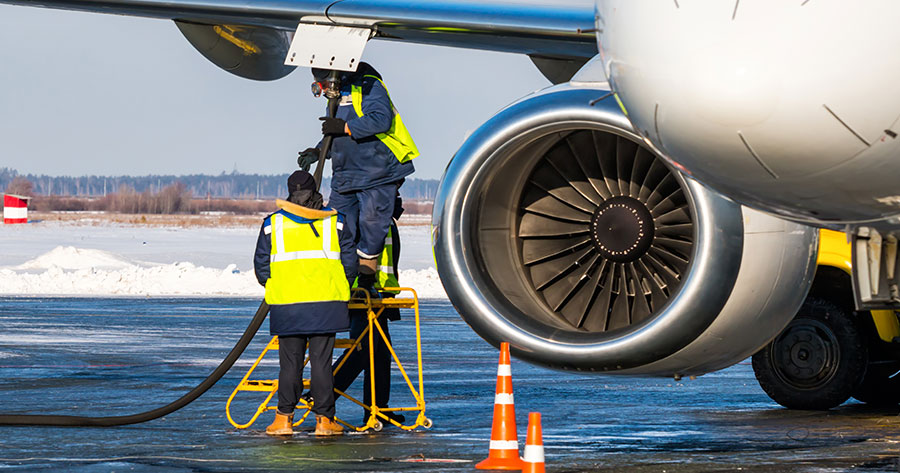
Prime Minister Anutin Charnvirakul has officially signed a special order to lift the export ban on aviation fuel (Jet A1). This decision follows an approval from the National Security Council (NSC) reacting to an urgent request from the Ministry of Energy.
The move comes after domestic oil refineries warned that their jet fuel inventories were rapidly approaching maximum storage capacity. This structural bottleneck had previously forced refineries to slow down their total production.
Previously, the government had temporarily suspended the export of refined petroleum products under Prime Minister’s Order No. 2/2026.
However, Secretary-General of the NSC, revealed that Vietnam and the Philippines specifically requested Thailand to export Jet A1 fuel to them. The government concluded that allowing this special export window will not harm Thailand’s internal energy stability because it specifically targets aviation fuel. Instead, it serves as a strategic solution to drain excess inventory, allowing domestic refineries to safely ramp up and maintain steady production of diesel and gasoline for Thai consumers.
The regulatory changes are now being processed by the Department of Energy Business and will be published in the Royal Gazette to take effect as soon as possible.
According to Bualuang Securities (BLS) and Kasikorn Securities (KS), this policy shift provides a massive upside for Thailand’s major refinery stocks. It clears excess inventory and allows plants to return to 105% capacity after being restricted to 100% in early May to manage limited storage space.
Thai Oil (TOP) stands to gain the most from this policy shift, holding the largest jet fuel production share at 17%. If all excess fuel is successfully exported, the company is projected to see its daily revenue increase by 269 million Baht, translating to an estimated daily profit boost of 88 million Baht.
Bangchak (BCP) follows with a 9% production share. The export opening is expected to drive its daily revenue up by 121 million Baht, yielding an extra 40 million Baht in daily profit.
Meanwhile, Star Petroleum (SPRC) controls a 10% share of production. This change could lift its daily revenue by 83 million Baht and increase daily profits by 27 million Baht.
Finally, IRPC and PTTGC both hold a 7% production share. IRPC is estimated to bring in an additional 72 million Baht in daily revenue (a 24 million Baht daily profit increase), while PTTGC is projected to add 66 million Baht to its daily revenue (a 22 million Baht daily profit increase).
Kasikorn Securities notes that TOP stands out as the top pick and biggest beneficiary of this announcement. Analysts also suggest that the government might consider lifting export restrictions on diesel next, as domestic production capacity for diesel similarly exceeds current domestic demand. This makes the refinery sector highly attractive for short-term tactical trading.