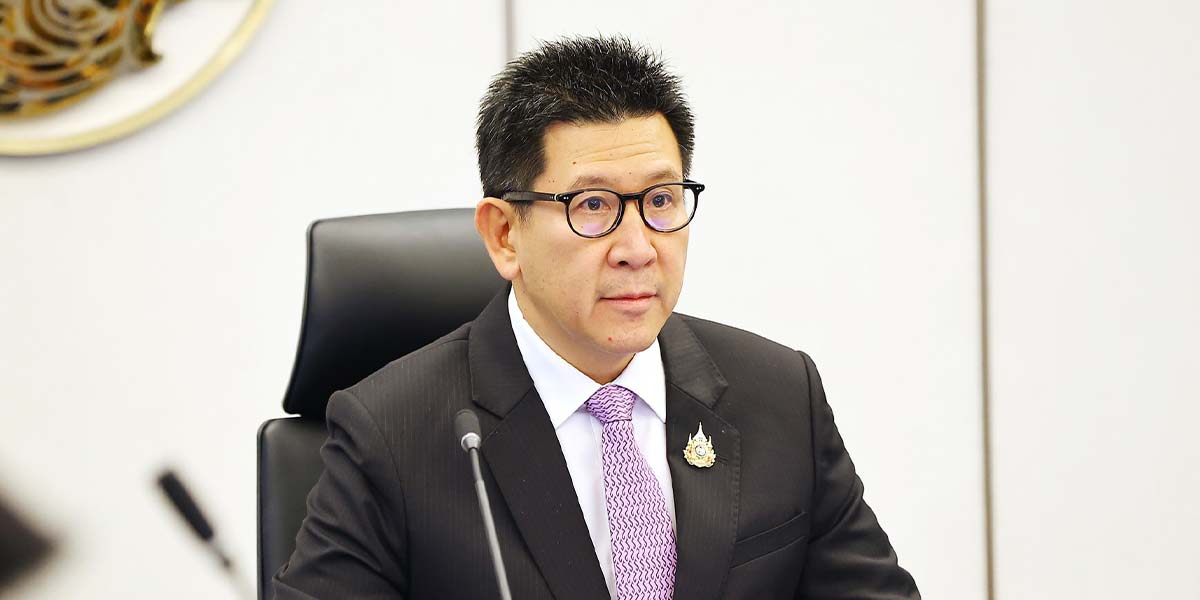
On Monday, Ekniti Nitithanprapas, Deputy Prime Minister and Minister of Finance, stated the recent appreciation of the baht, attributing it to the United States’ interest rate cuts. This has caused capital to flow from countries with lower returns to those with higher returns, reversing the natural flow of capitals.
Ekniti said he has already discussed this issue with Vitai Ratanakorn, Governor of the Bank of Thailand (BOT), and came to understand that the Monetary Policy Committee (MPC) will consider the concern. However, he noted that BOT manages its monetary policy independently, while the Ministry of Finance operates in a coordinated manner, given the current economic circumstances.
The Finance Minister further elaborated that an excessively strong baht may negatively impact the Thai economy and has reached a level that is “unacceptable.” The Ministry has instructed relevant agencies to consider measures under its boundary to help manage the situation, such as managing government and state enterprise imports. Furthermore, the Public Debt Management Office (PDMO) has been assigned to consider using public debt payment management as a supplementary mechanism.
However, he acknowledged that these measures have limitations, given that Thailand’s proportion of foreign debt is not particularly high. Nevertheless, he affirmed the commitment to maximize efforts and to work closely with all related agencies.
Ekniti reiterated that the current structure of the Thai economy is not ready to handle high currency volatility, as the country still relies primarily on exports. Consequently, significant fluctuations in the baht could have wide-ranging effects on the overall economic system.