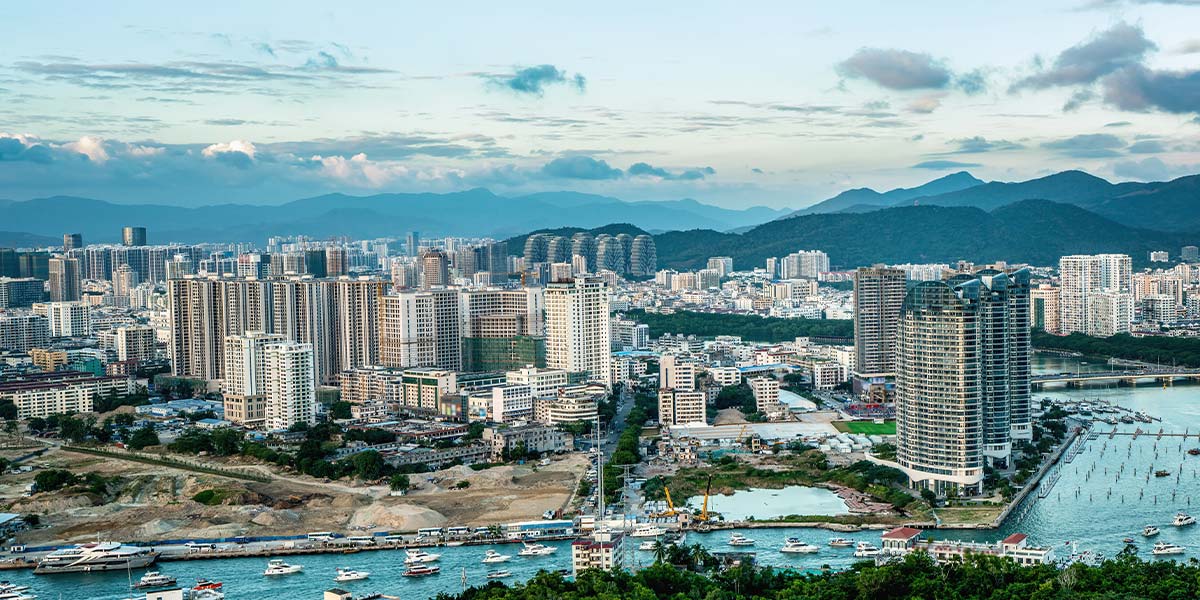
China has moved to carve out the southern island province of Hainan—comparable in size to Belgium and with an economy on par with several mid-sized nations—for separate customs processing, part of a broader push to attract foreign investment and demonstrate eligibility for major trans-Pacific trade agreements.
Under the new framework, Hainan will function as a duty-free port, enabling goods with at least 30% local value add to enter mainland China tariff-free. Foreign companies are set to gain expanded access to service sectors typically limited on the mainland, as Beijing seeks to cultivate Hainan as a commercial gateway akin to Hong Kong.
Officials hope that the shift will boost investment and support China’s effort to pivot away from reliance on the world’s largest consumer market, the United States, amid tariff pressure from President Donald Trump’s ongoing trade policies.
Authorities have emphasized that the Hainan Free Trade Port is expected to become a symbol of China’s new era of openness. In an editorial, state news agency Xinhua remarked that the port is set to bolster the free trade environment that has been plagued by rising protectionism and unilateralism in the recent past, referencing the strains resulting from Trump-era tariffs.
At the heart of this policy is China’s ambition to join the Comprehensive and Progressive Agreement for Trans-Pacific Partnership (CPTPP), one of the world’s largest free-trade pacts. Policymakers are using the Hainan pilot as proof that China can align itself with CPTPP’s high benchmarks for trade and investment liberalisation.
However, analysts and negotiators remain cautious. Membership in the CPTPP requires comprehensive nationwide reforms, and there is skepticism over whether the Hainan experiment will be sufficient evidence of China’s readiness, particularly against the backdrop of Beijing’s recent trade friction with Japan and the unresolved Taiwan dispute.
Hainan, whose GDP reached $113 billion last year, is significantly smaller than Hong Kong’s $407 billion economy, although the World Bank places Hainan as roughly the world’s 70th largest economy. Ran Guo, Director for Consumer Economy at the China-Britain Business Council, noted that the policy shift could bolster Hainan’s tourism, attract foreign capital, and enhance its role as a logistics hub serving Southeast Asia.
Despite the optimism, foreign direct investment into China has slipped 10.4% year-on-year in the first three quarters of 2025, according to official figures. Nonetheless, policymakers remain determined to counter falling investment and shift China’s growth model toward a balance between consumption and investment, even as they contemplate more difficult structural reforms.
Diplomats negotiating the CPTPP remain wary, stressing that large-scale, nationwide reforms—not just isolated pilots—are required for accession.