The world has seen uncertainty rise to unprecedented levels over the past few years. This was especially true in 2025, when U.S. President Donald Trump upended global trade with reciprocal tariffs, effectively forcing nations into a corner: cut a deal with Washington or lose the ability to compete with economies that had already capitulated to the Trump administration.
After a turbulent first half of 2025, just as global markets seemed to be settling, the war in Gaza escalated sharply in October. Trump then kicked off 2026 with a series of aggressive unilateral moves. In January, U.S. troops entered Venezuela unannounced, capturing President Nicolás Maduro and flying him to the United States to stand trial—all while Washington demanded that Venezuela buy more American goods.
Shortly after, the U.S. president turned his sights toward Greenland, vowing to absorb the territory. By February 2026, the administration ordered the bombing of Iran, claiming the nation was developing nuclear weapons capable of striking Washington. This escalation sparked immediate global disruption when Iran retaliated by closing the Strait of Hormuz—a vital maritime chokepoint through which roughly 20% of the world’s energy shipments pass.
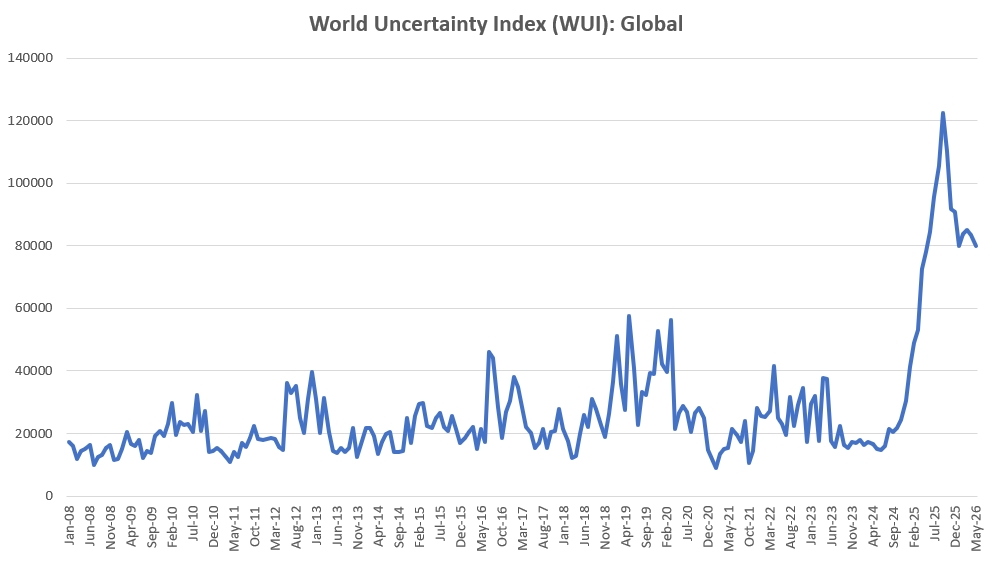
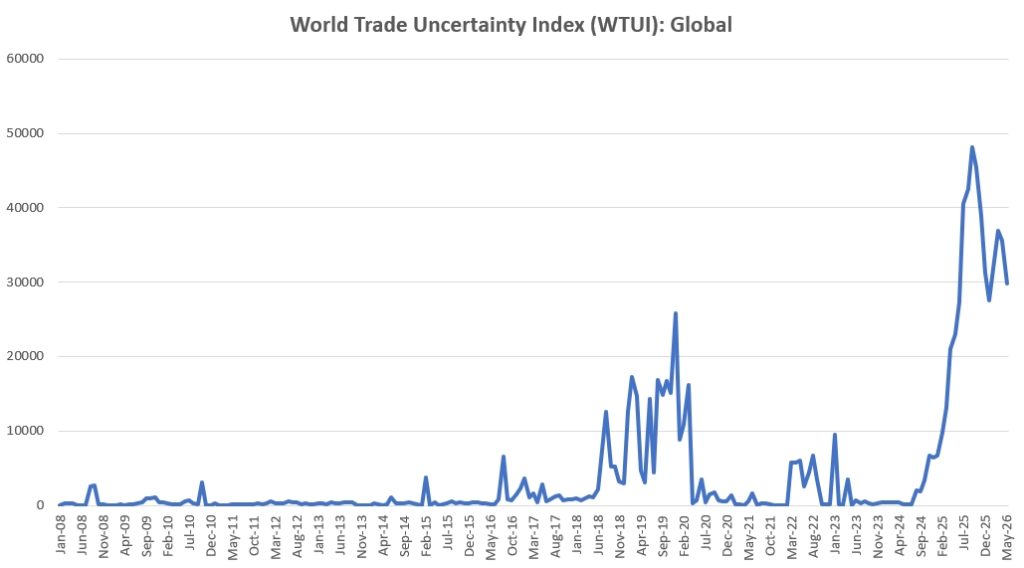
According to IMF data, the global uncertainty index in 2025 skyrocketed to its highest level in nearly two decades. While that volatility has subsided by nearly half by mid-2026, the baseline level of global anxiety remains historically high.
With these uncertainties in mind, companies are no longer just looking at cost and efficiency; they are looking for survival. According to a new global trade analysis by UK-based risk intelligence firm Verisk Maplecroft, the resilience of international trade has actively deteriorated in more than 150 countries—accounting a staggering 90% of global commerce. Furthermore, with a third of the world’s busiest ports and airports deeply vulnerable to conflict, climate risks, and domestic security threats, multinational corporations are desperately seeking stable alternatives.
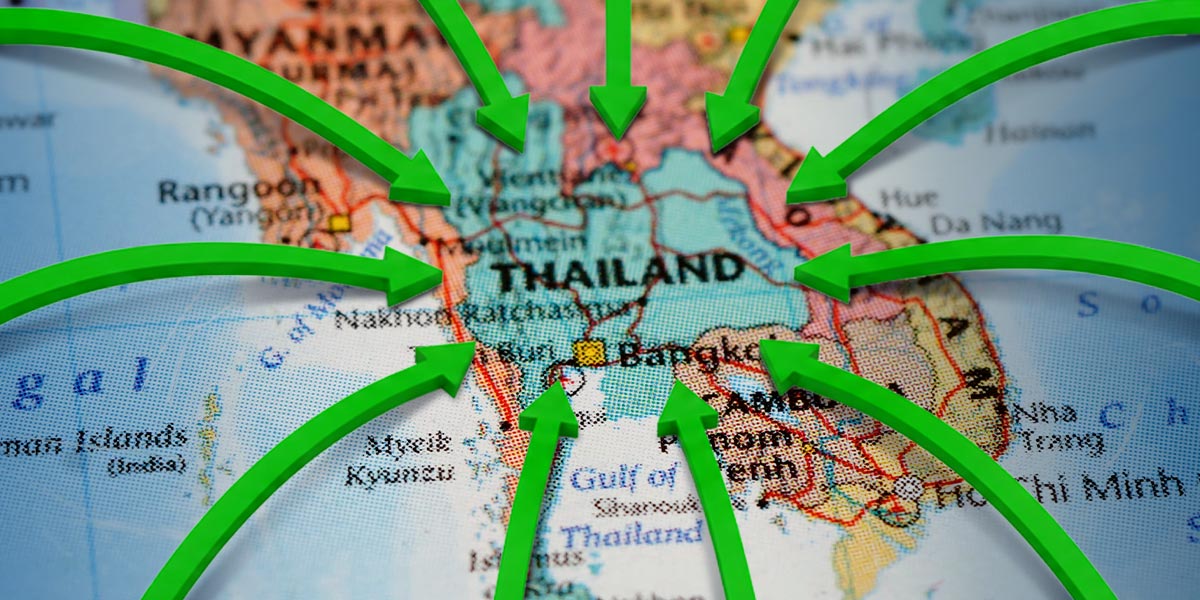
This widespread volatility has opened a rare window of opportunity for a select group of “rising stars”—and Thailand is uniquely positioned to lead the pack.
While the recent closure of the Strait of Hormuz during the U.S.-Israel conflict with Iran dealt a short-term blow to energy costs across Southeast Asia, Verisk Maplecroft’s data suggests that investors willing to take a longer-term view will find Thailand exceptionally rewarding. Over the past five years, operational risks within the Kingdom have steadily decreased compared to its regional peers. This stability sets it apart from other global contenders.
Verisk Maplecroft evaluates supply chain potential based on three core pillars: market openness, regulatory strength, and labor rights. When matched against its immediate competition, Thailand’s advantages become clear:
- Immunity to Political Paralysis: While neighboring competitors like the Philippines grapple with severe corruption scandals and looming presidential impeachment trials that actively dent foreign investment, Thailand has maintained structural policy continuity. As Verisk Maplecroft analysts point out, Thailand possesses the right “ingredients” for industries seeking to diversify safely.
- A Pivot to High-Value Tech: Even with an aging workforce and higher labor costs than some of its neighbors, Thailand is successfully bypassing the “cheap labor” trap. Powered by a massive influx of Artificial Intelligence (AI) investments, the nation’s electronics sector is rapidly modernizing. This evolution positions the country perfectly to host sophisticated, higher-value supply chain links that other developing nations simply cannot support.
- The Overcrowding of Early Winners: First-wave beneficiaries of the U.S.-China decoupling—such as Vietnam and Malaysia—are facing operational bottlenecks, with Verisk Maplecroft warning that risks to multinational supply chains in those jurisdictions are actually increasing. As these hubs oversaturate, Thailand stands out as an underutilized, highly stable alternative.
The global supply chain is no longer just moving out of China; it is actively fleeing instability. While Latin American nations like Argentina are showing potential, they still lack the scaled manufacturing platforms that Southeast Asia perfected.
For Thailand, this is the ultimate moment to strike. By leveraging its superior regulatory environment, capital with AI-driven electronics manufacturing, and a proven track record of lower operational risk, the Kingdom can position itself not just as a participant in global trade, but as the indispensable backbone of the modern, resilient supply chain.