
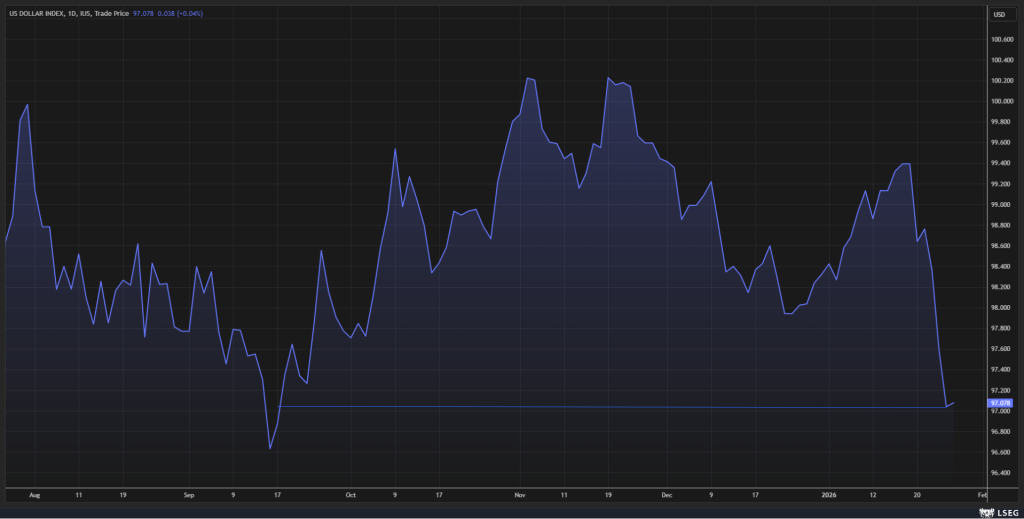
The U.S. dollar lost ground against major international currencies on Monday, sliding to its weakest point since last September amid speculation surrounding possible joint intervention by American and Japanese authorities to support the yen. The prospect of coordinated action has triggered notable movements in currency markets, with investors adjusting their positions.
Persistent reports indicating that the United States may be collaborating with Japanese officials to intervene in the yen have put pressure on the dollar, which fell 0.6% during Monday’s trading. The U.S. Dollar Index registered near 97, briefly touching 96.85—a level not seen in four months.
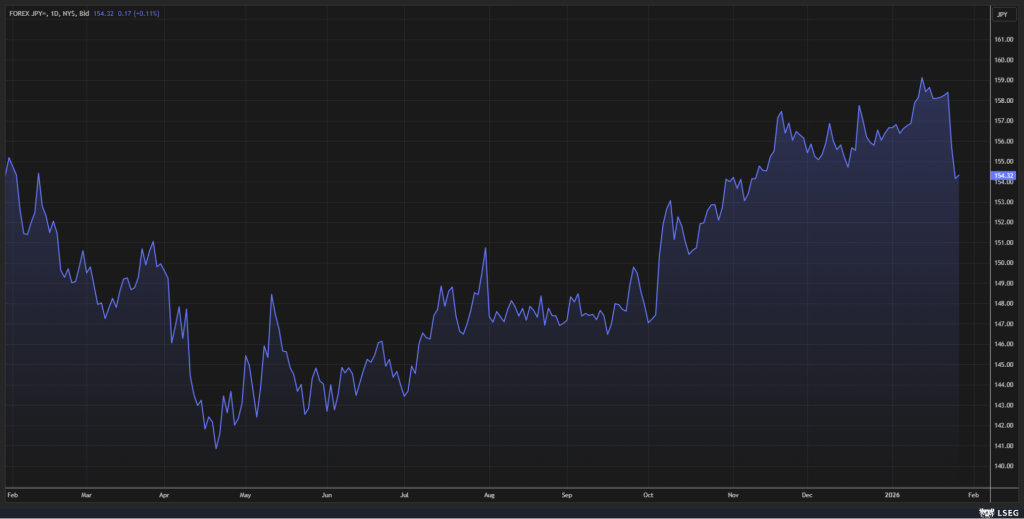
This renewed focus on potential currency intervention follows activity late last week, when dealers reported New York Federal Reserve inquiries into dollar-yen exchange rates. Such checks have frequently preceded official market action, prompting a sharp reversal in yen positioning. Since Friday, the Japanese currency has gained more than 3% from recent lows, as investors unwind bets against it.
The yen’s advance raised market sensitivity about the risks of the first collaborative currency intervention between the U.S. and Japan in over a decade. The yen was trading between 153 and 154 to the dollar in Monday’s session, a marked improvement from levels near 159 just under two weeks ago.
Market participants remain cautious, recalling an episode in August, 2024, when a rush to cover yen short positions contributed to a broad sell-off in global equities. Currency volatility stemming from sharp moves in the yen has previously impacted U.S. stock performance.
Earlier this month and at the end of last year, the yen faced renewed weakness amid market expectations that Prime Minister Sanae Takaichi would implement more expansive fiscal policies to support Japan’s economy. These announcements pushed the country’s 40-year bond yield past 4% last week, reaching the highest point in decades.