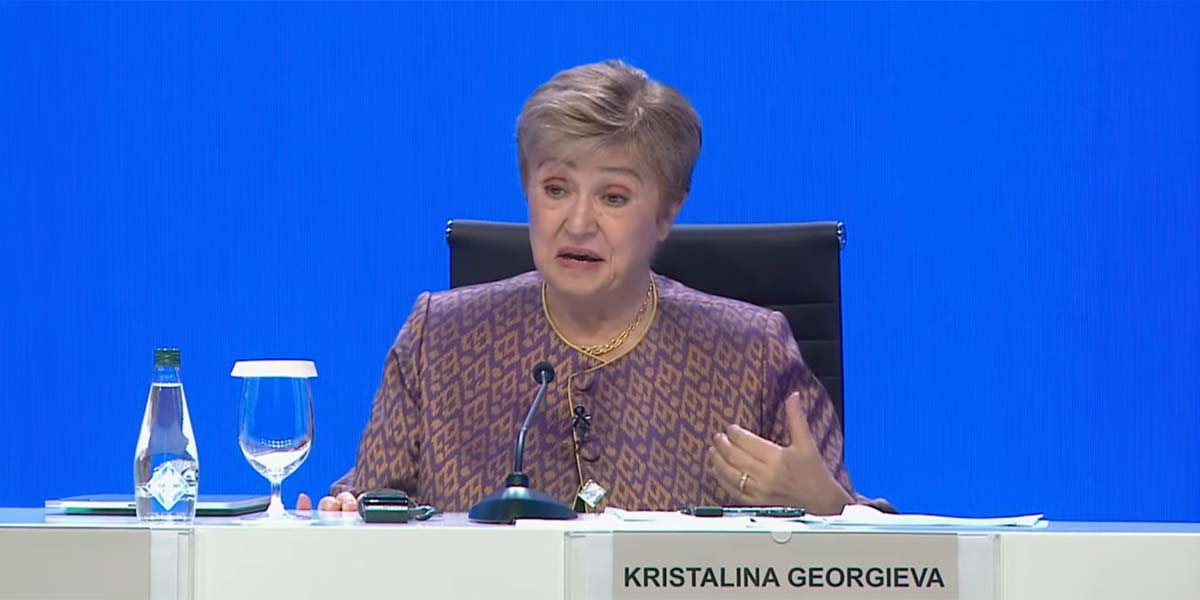
International Monetary Fund Managing Director Kristalina Georgieva warned global policymakers that the world economy’s resilience is reaching its limits, calling for immediate fiscal tightening, heightened vigilance over artificial intelligence market risks, and targeted relief for vulnerable populations.
Speaking at the Global Policy Agenda press briefing during the 2026 IMF-World Bank Annual Meetings in Bangkok, Georgieva outlined a slowing global growth forecast of 3.1% for 2026, down from 3.4% achieved last year, as depleted fiscal and energy buffers strain national balance sheets across advanced and developing economies alike. The IMF baseline reflects a tug-of-war between opposing macroeconomic drivers: a negative energy supply shock triggered by ongoing war in the Middle East and a positive demand surge linked to artificial intelligence adoption.
In her opening address, Georgieva delivered a stark call to action for governments to execute urgent repairs to the fiscal house before the cracks widen. After years of repetitive economic shocks, many countries failed to rebuild fiscal buffers during the post-pandemic recovery, leaving government balance sheets exposed to multi-decade high bond yieldsม mounting debt-servicing costs, and high inflation. Georgieva urged finance ministers to enhance revenue collection, rationalize public spending, and modernize public financial management systems to prevent structural fiscal deterioration.
Addressing the impact of surging energy and food inflation on households, Georgieva emphasized that fiscal policy must protect people, not prices. She advised governments against broad price subsidies, urging them instead to deploy temporary, targeted fiscal support to the most vulnerable segments of society while preserving market price signals. On monetary policy, she counseled central banks to maintain a laser focus on price stability mandates, noting that a prudent hawkish bias remains appropriate where inflation persists above target.
Georgieva also offered a nuanced assessment of artificial intelligence, citing Amara’s Law—the tendency to overestimate the short-term benefits of new technologies while underestimating their long-term transformation. She acknowledged that AI could bring prosperity, but also risks at the same time. The MD cautioned that it is possible to face a short-term disappointment that could lead to a disorderly market correction across asset classes.
Compounding these market risks, Georgieva highlighted the rising threat of AI-enabled cyber attacks, referencing recent incidents in France where compromised digital systems disrupted temperature controls in food storage facilities. Warning that cyber threats can directly target the functioning of global financial infrastructure, she called on regulatory authorities to strengthen cyber resilience, safeguard critical digital infrastructure, and manage market concentration risks inherent in the technology cycle.