
SCB X Public Company Limited (SET: SCB or SCBX), Thailand’s leading financial technology group, has partnered with Quantum Technology Foundation (Thailand) Co., Ltd. (QTFT) to release a special report titled “SCBX Quantum Outlook: Post-Quantum Cryptography.”
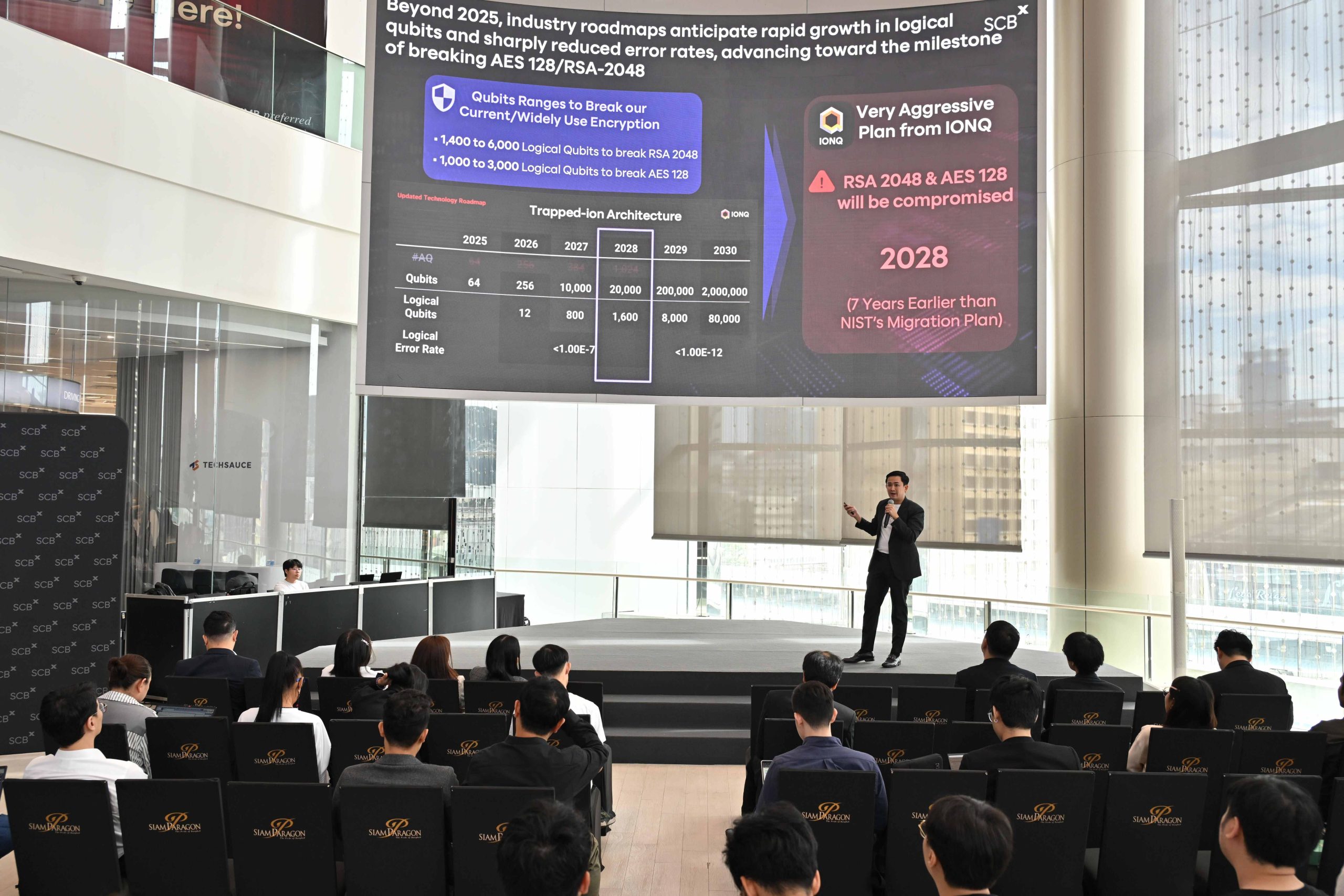
The report underscores the critical need to prepare for emerging threats posed by quantum computing, which could compromise data security and financial infrastructure in the near future.
It provides actionable strategic guidelines for industries to transition toward Post-Quantum Cryptography (PQC), mitigating risks from current encryption systems such as RSA and ECC that experts predict could be broken by quantum computers as early as 2030–2035.
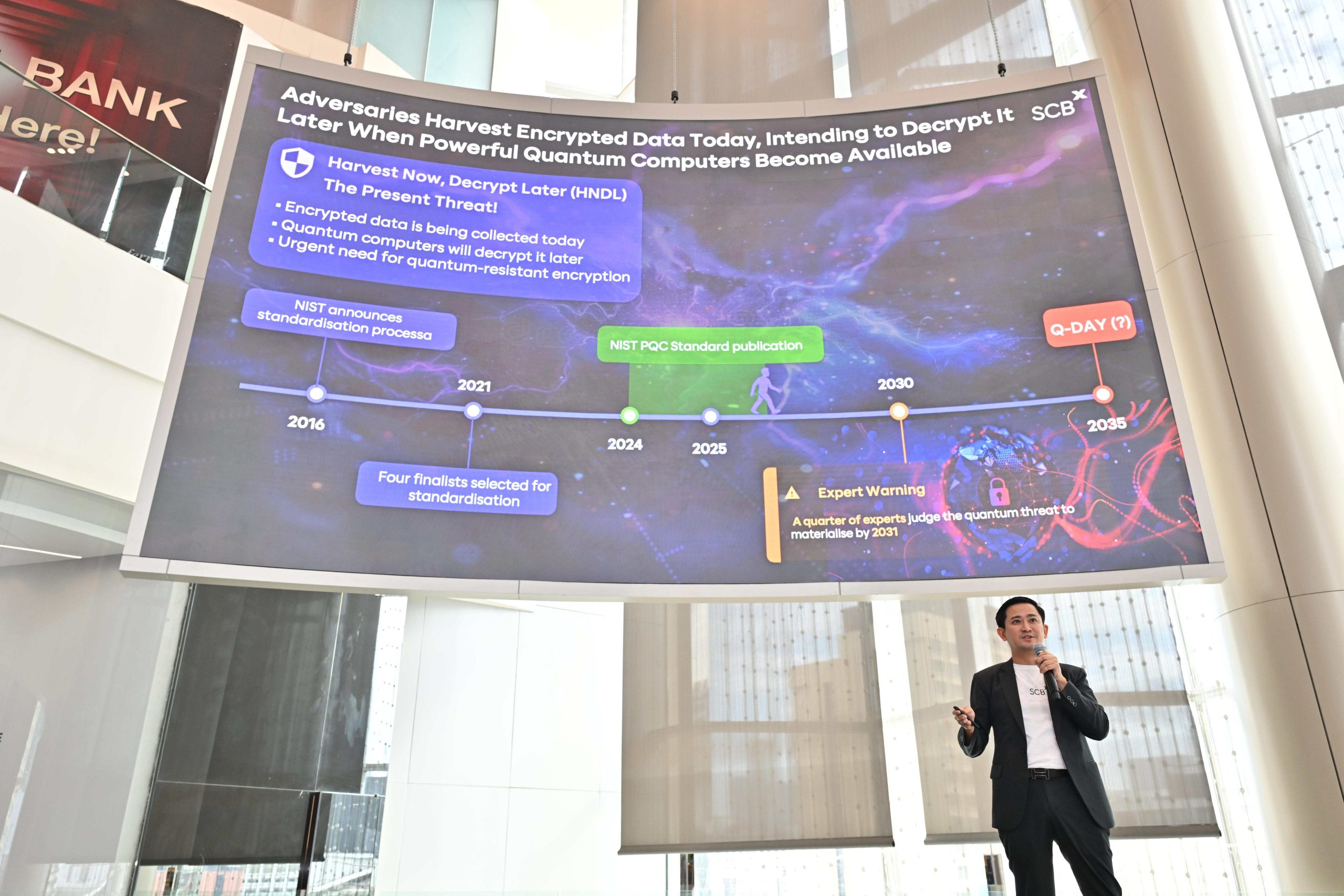
SCBX R&D Highlights Critical Quantum-Era Risks: Harvest-Now/Decrypt-Later (HNDL) Threat
SCBX’s Research & Development team warns that Harvest-Now/Decrypt-Later (HNDL) poses one of the most significant emerging threats. This tactic involves cybercriminals capturing and storing encrypted data today—particularly long-term sensitive information—with the intent to decrypt it once quantum computing capabilities advance.
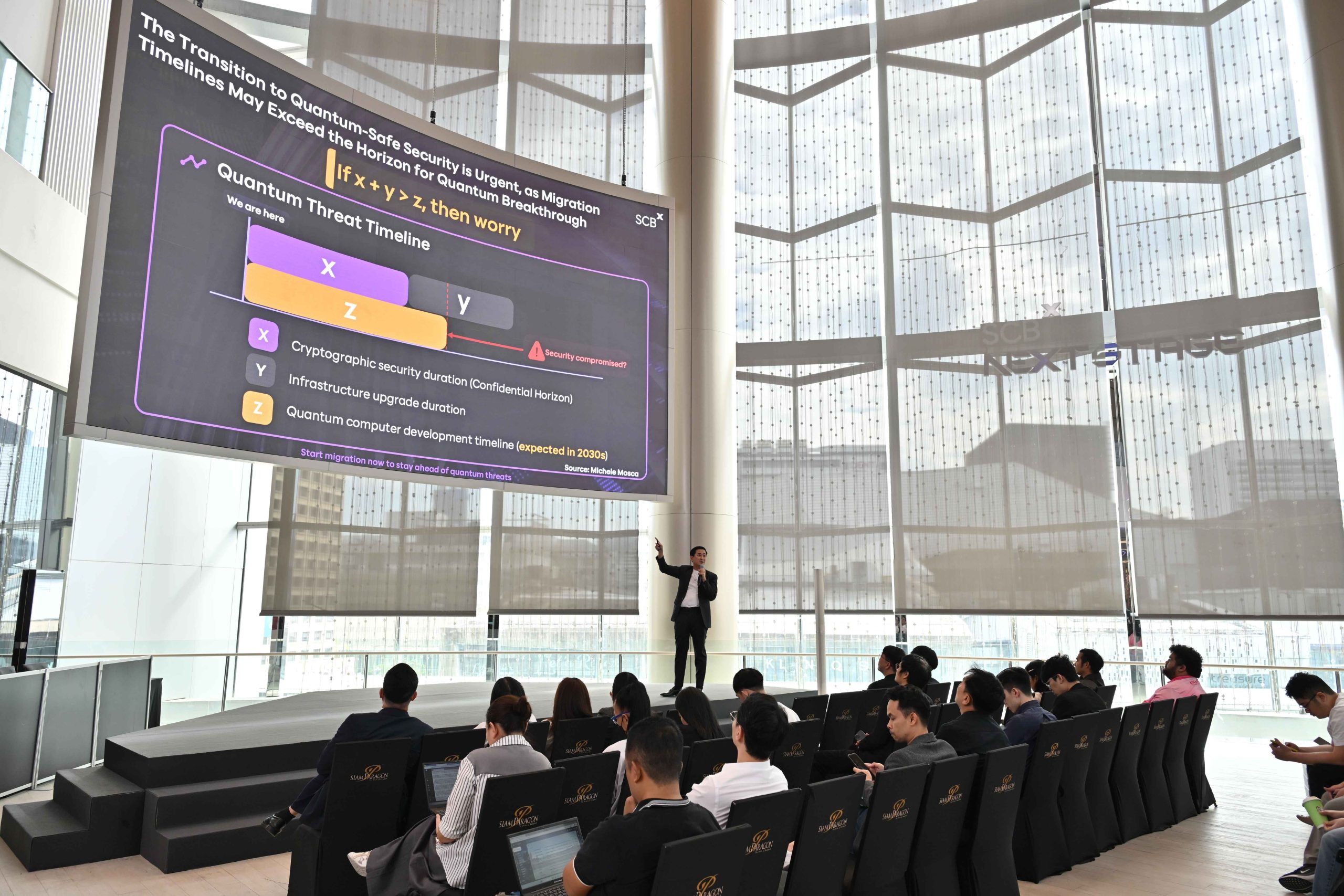
As a result, data generated now could be compromised within a few years. SCBX emphasizes that organizations must begin planning and migrating to Post-Quantum Cryptography (PQC) immediately to safeguard against future breaches and minimize risk.

Dr. Tutanon Sinthupasith, Head of R&D at SCBX, stated “Our role is not only to ensure SCBX stays ahead of technology but also to lead in building national resilience. We aim to collaborate with academia, regulators, and global tech leaders to transform research into public knowledge, raising awareness and strengthening Thailand’s technology infrastructure for a secure quantum future.”

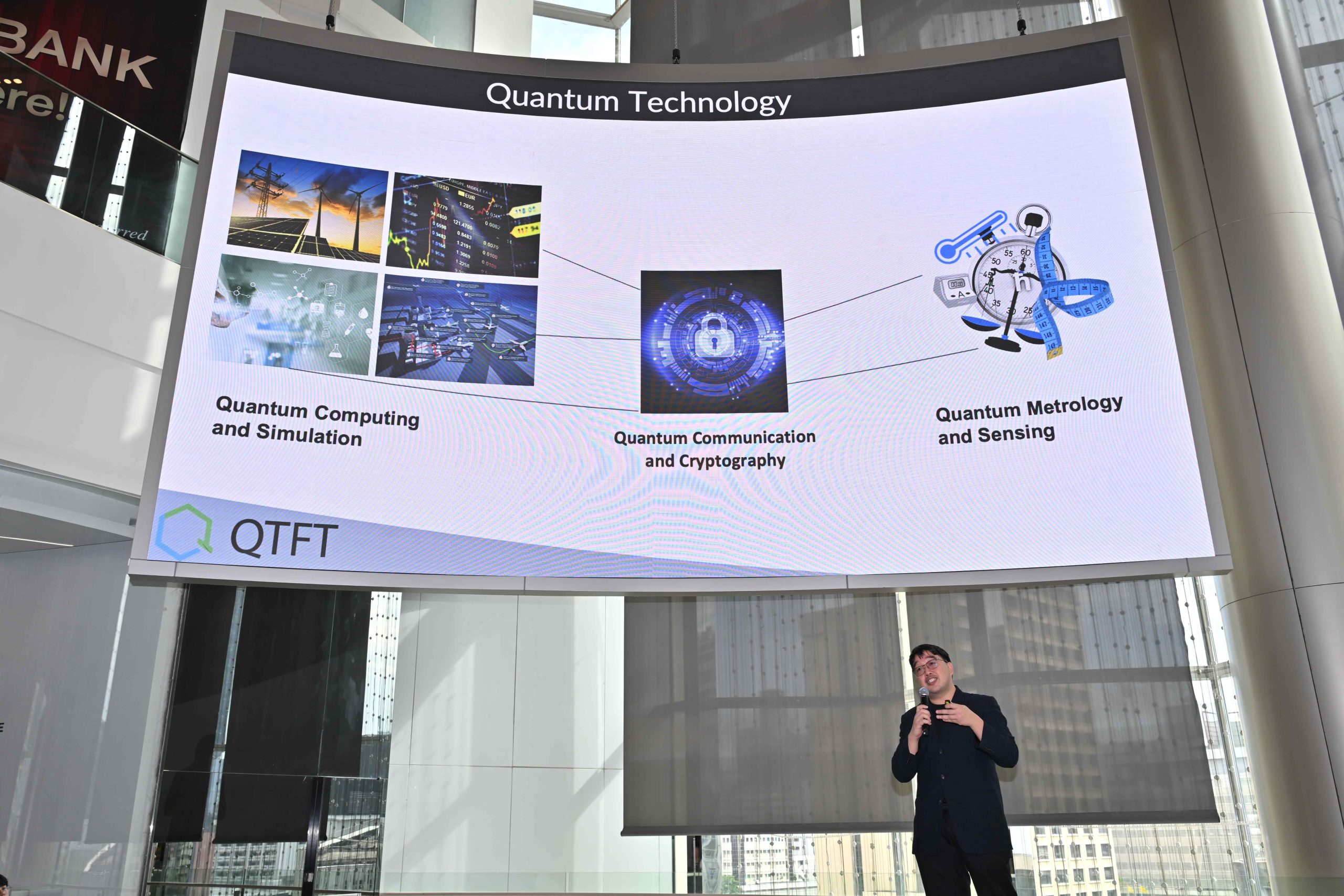
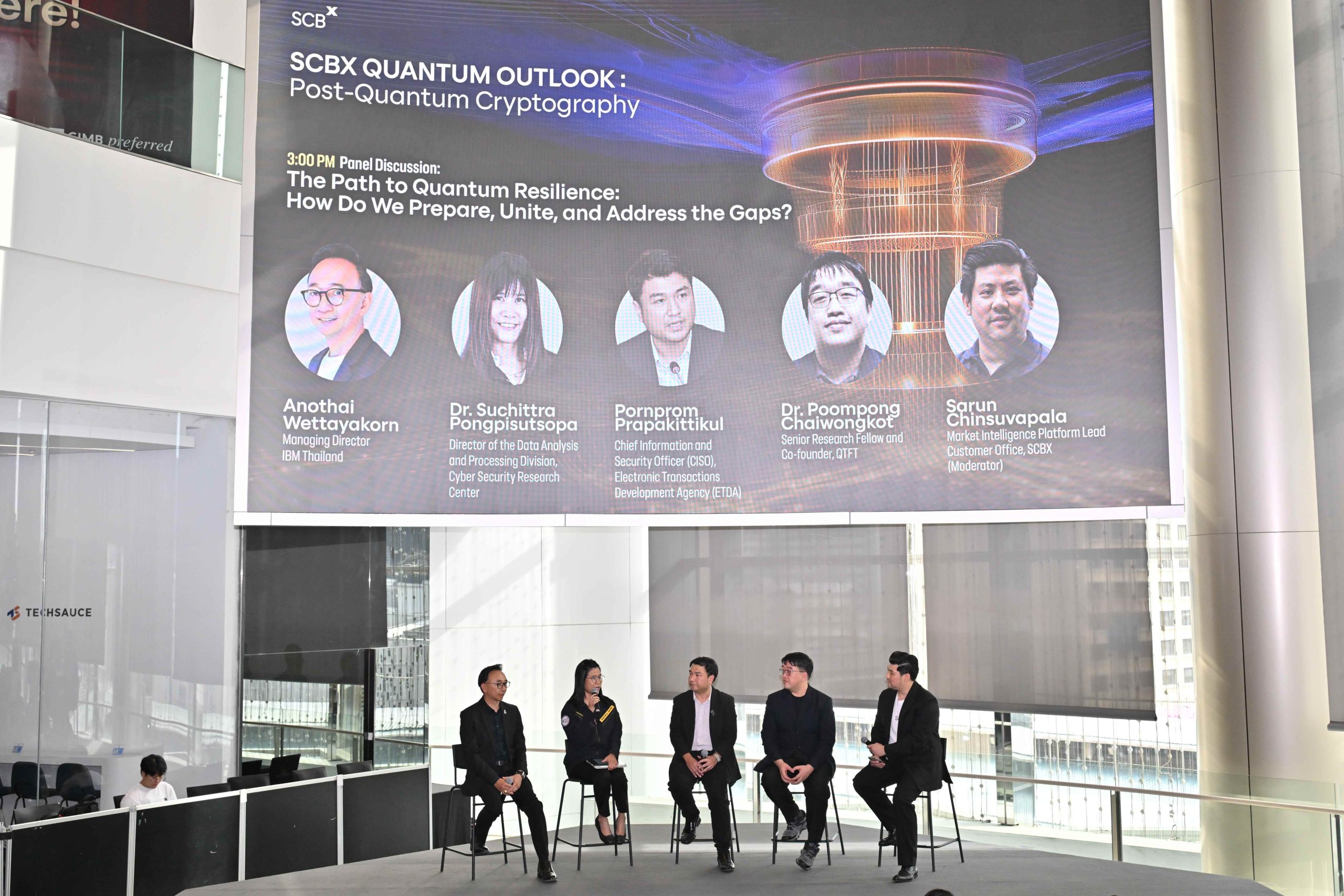
Dr. Poompong Chaiwongkot, Senior Researcher Fellow and Co-Founder of QTFT, added “Thailand’s quantum-safe migration begins with a well-organized cryptographic inventory that tells us what we must protect and where to act. Early coordination across sectors and deliberate planning toward crypto-agility will ensure a smooth and secure transition.”
Strategic Guidelines for Transitioning to Post-Quantum Cryptography (PQC)
The report outlines a structured approach to PQC migration, covering all organizational dimensions to manage risk and ensure long-term security:
- Inventory and Prioritize Cryptographic Assets
Begin by creating a detailed inventory and classification of all cryptographic assets to identify high-risk systems vulnerable to HNDL attacks. Assess key lifetimes and data sensitivity to prioritize migration effectively.
- Adopt Hybrid Cryptography for Maximum Security
Combine robust classical algorithms (e.g., X25519) with new PQC algorithms (e.g., Kyber) and consider Quantum Key Distribution (QKD) for physics-level security, ensuring resilience against both current and future threats.
- Enable Crypto-Agility and Upgrade Infrastructure
Build systems capable of rapidly adapting encryption algorithms without disrupting operations. Upgrade Key Management Systems (KMS) and Hardware Security Modules (HSM) to support PQC standards efficiently.
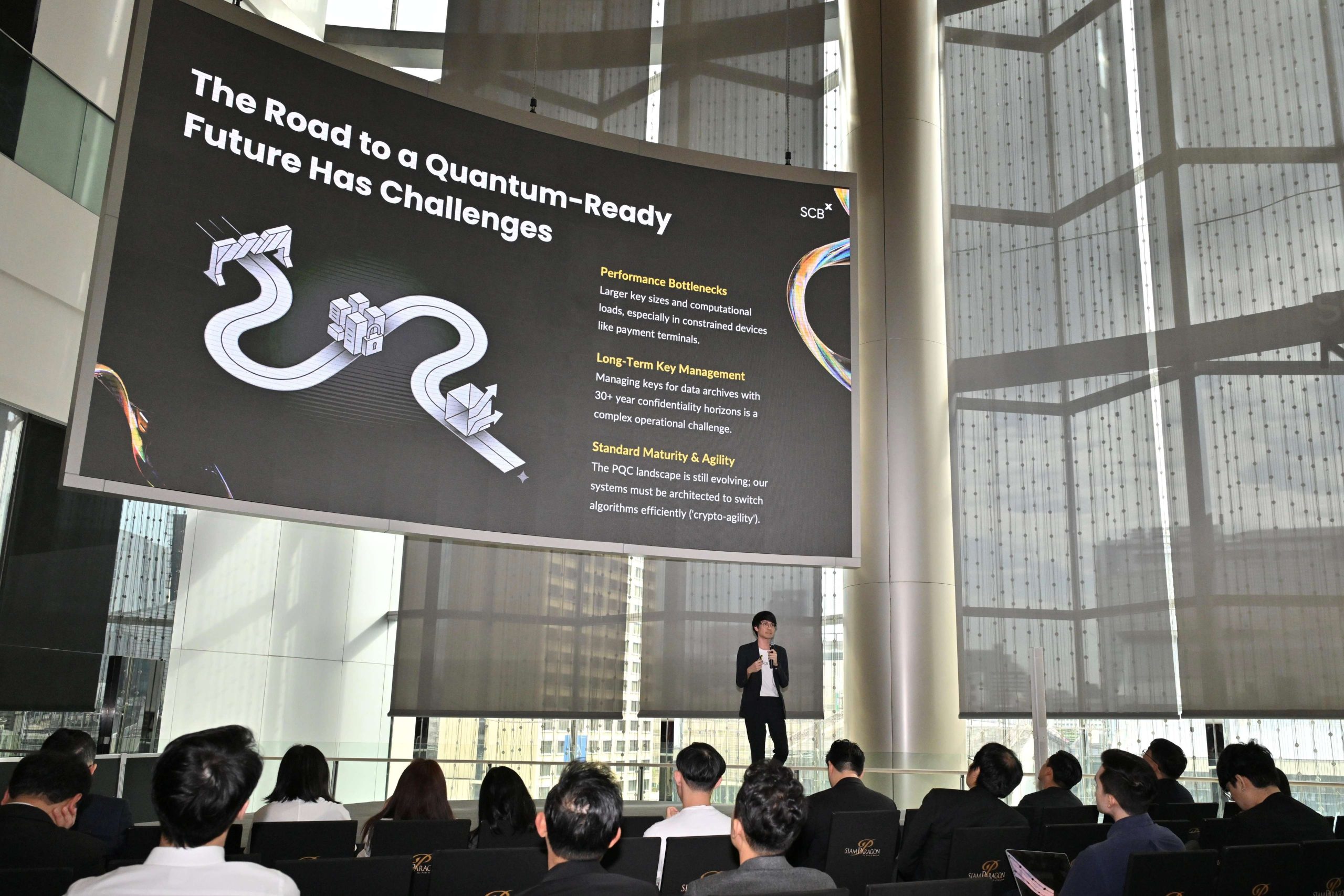
The transition must comply with global standards such as FIPS and Common Criteria (CC) to ensure system security and trust. This report reinforces SCBX’s commitment to leading advanced security technologies and laying the foundation for a robust and trusted digital economy in Thailand.
Download the full report “SCBX Quantum Outlook: Post-Quantum Cryptography” here: