
Costs for transporting crude oil and liquefied natural gas reached historic peaks this week, following severe disruptions in the Strait of Hormuz amid escalating conflict between the United States and Iran. The interruption in a corridor vital to global energy shipments has fueled a sharp jump in international energy prices.
Supermarket shipping costs in the Middle East set new records after Iranian actions against vessels passing through the Strait of Hormuz led to a significant reduction in maritime traffic, according to industry sources and data reported on Tuesday. This strategic waterway, connecting Iran and Oman, is responsible for about 20% of the world’s oil trade and carries considerable volumes of natural gas.
Shipping activity has nearly stalled, following a series of incidents involving attacks on ships as Iran responded to military strikes from the United States and Israel.
These developments have led to a marked escalation in oil and European natural gas prices. Over the course of the week, Brent crude futures climbed close to 10%, driven by concerns about extended disruptions in Middle Eastern supplies and the temporary suspension of several oil and gas operations in the region.
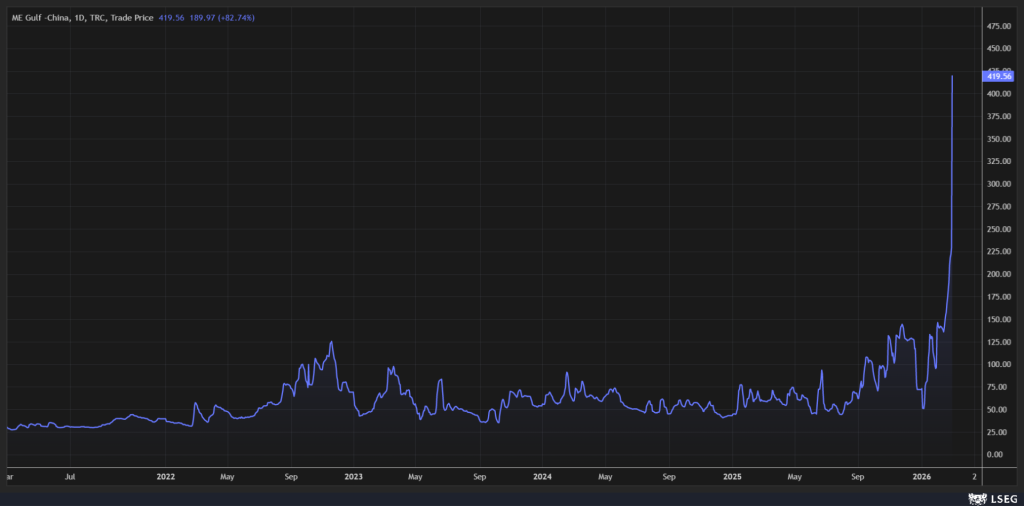
Tanker charter rates also saw substantial increases. The cost of booking a CCX tanker to move crude from the Middle Eastern Gulf to China soared by more than 80% on Monday, reaching W419.56—a level without precedent in the history of the route.
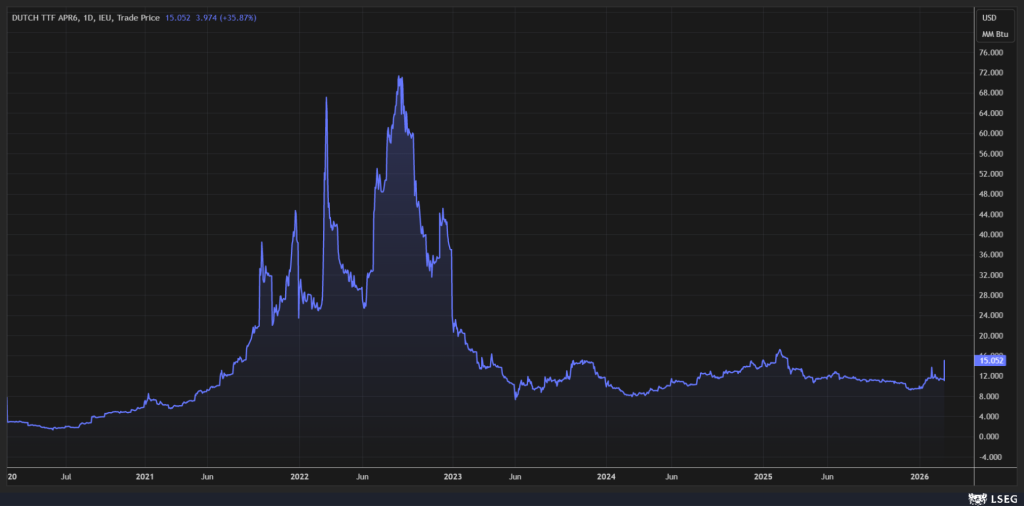
Intercontinental Exchange Dutch TTF Natural Gas Last Day Financial Monthly Futures rose 35% to 15.05, the highest in a year.
On March 3, 2026, the Islamic Revolutionary Guard Corps (IRGC) of Iran officially declared the Strait of Hormuz closed, threatening to “set fire” to any vessel attempting to pass through the strategic waterway. This move follows three consecutive days of attacks on Tehran, which Iranian officials attribute to the United States and Israel. General Sardar Ebrahim Jabbari stated that the military will not allow “even a single drop of oil” to leave the region.
The closure of this vital maritime corridor — responsible for transporting approximately one-fifth of the world’s oil supply — has raised immediate alarms regarding a global energy crisis. While the U.S. claims to have already destroyed 11 Iranian warships, analysts remain uncertain if Iran can sustain a total blockade without inciting a massive military counter-response from international forces.
Simultaneously, the energy market faced further instability as QatarEnergy suspended its liquefied natural gas (LNG) production. The company cited safety concerns following military strikes on its facilities in Ras Laffan and Mesaieed. Consequently, European LNG prices surged by over 40%, a significant blow considering Qatar is a top global exporter, providing 80% of its supply to Asia, including Thailand.