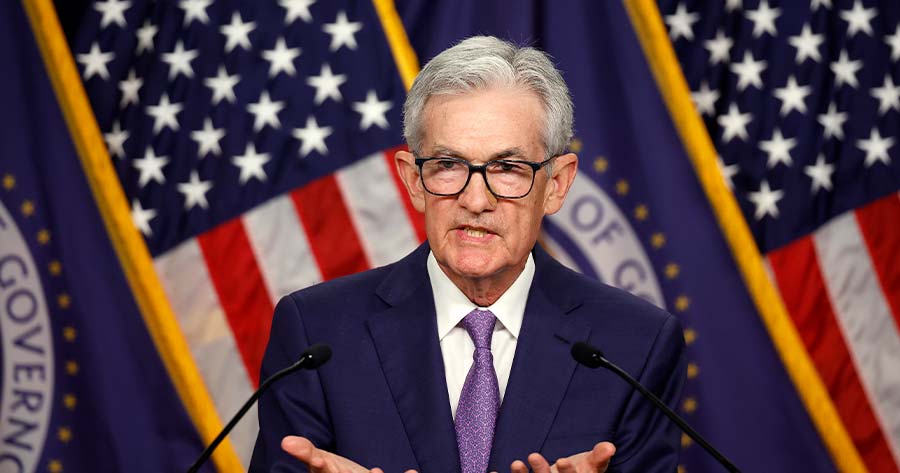
On Monday, Federal Reserve Chair Jerome Powell indicated that the current monetary policy remains appropriate for assessing the impact of rising oil costs linked to ongoing conflict in the Middle East. Powell restated his recent views, emphasizing the central bank’s role in monitoring how heightened energy prices could affect inflation and the broader U.S. economy.
Powell explained that while monetary policy is a tool aimed at influencing demand, it is not well-suited to address sudden fluctuations in oil supply. He noted that previous energy price shocks have typically been short-lived, while the Fed’s interest rate adjustments take effect gradually and over time.
Speaking at Harvard University, Powell outlined that any policy move to counter oil-driven inflation could end up exerting downward pressure on economic growth after the initial shock subsides.
Meanwhile, the U.S. dollar rose, reaching its highest point since May 2025 as investors sought stability amid escalating tensions in the Middle East. The U.S. Dollar Index, tracking the currency against six major peers, increased by 0.4% to 100.5 and was headed for its strongest monthly performance since July 2025.